AI Presentation Software for Modern Digital Workflows
Discover how AI presentation software fits into modern digital workflows. Learn how Unni.ai integrates with how corporate and educational teams work today.
The rapid evolution of generative artificial intelligence has moved beyond simple text prompts into the realm of structured visual communication. For modern businesses, the emergence of the AI presentation generator represents a fundamental shift in how information is synthesized and shared. As organizations face increasing pressure to deliver data-driven insights at higher frequencies, the traditional manual slide-building process has become a bottleneck to productivity.
Unni.ai views this transition not merely as a matter of convenience, but as a strategic necessity. By integrating presentation automation into the core of the corporate tech stack, companies can bridge the gap between raw data and persuasive storytelling. This article explores the nuanced role of educational AI and automated design in redefining professional excellence across digital-first environments.
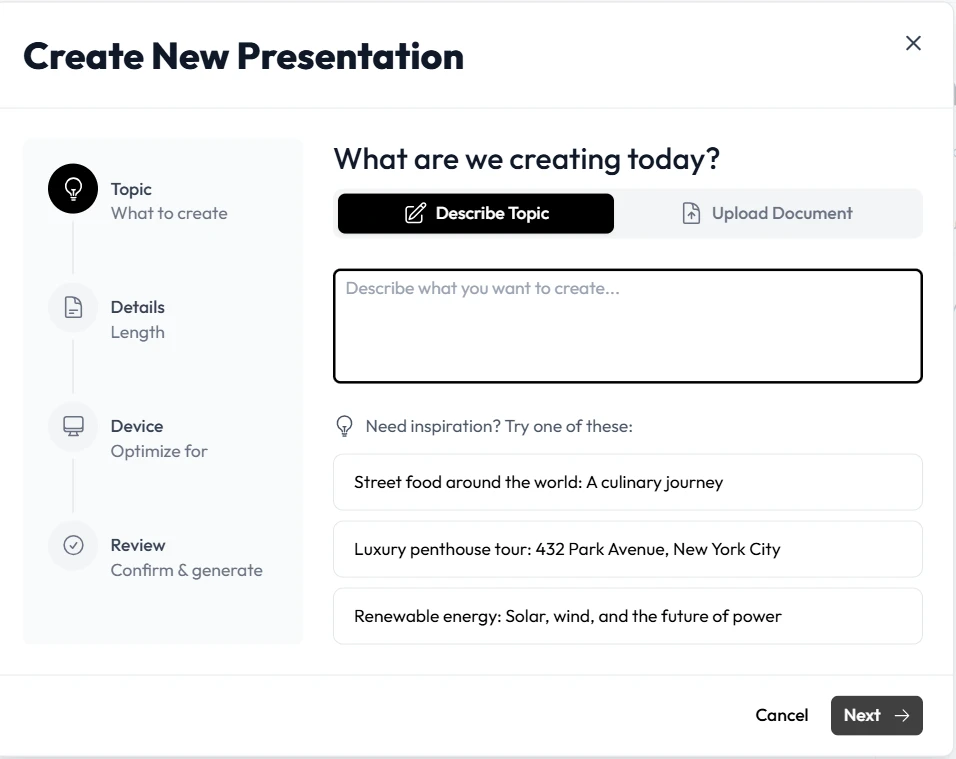
The Paradigm Shift in Corporate Visual Communication
For decades, presentation software remained static, requiring users to manually manipulate text boxes, alignment, and color palettes. This “manual-first” approach often prioritized aesthetic tinkering over content quality. In a modern digital workflow, this is no longer sustainable.
Industry data suggests that middle management and instructional designers spend upwards of 20% of their work week formatting slides. Presentation automation aims to reclaim this time. By utilizing Large Language Models (LLMs) and specialized design algorithms, Unni.ai allows professionals to focus on the “what” while the AI handles the “how.”
From Static Templates to Dynamic Intelligence
Unlike traditional templates that offer rigid structures, an AI presentation generator analyzes the semantic weight of the input text. It identifies key performance indicators (KPIs), suggests relevant iconography, and ensures that the visual hierarchy supports the underlying narrative. This intelligence ensures that a quarterly business review or a technical training module remains coherent and visually engaging without requiring a dedicated graphic design team.
The Role of Educational AI in Professional Development
The boundaries between “corporate training” and “academic education” are blurring. Organizations are increasingly functioning as learning institutions, where continuous upskilling is a competitive advantage. Here, educational AI plays a pivotal role in democratizing knowledge transfer.
Instructional designers are now using Unni.ai to transform dense policy documents or technical manuals into digestible, interactive learning modules. The ability to instantly convert a 50-page PDF into a structured 15-slide deck allows L&D teams to respond to market changes in real-time.
Cognitive Load and Instructional Design
Effective presentation software must adhere to the principles of instructional design. Research indicates that “split-attention effect” occurs when learners are forced to process disparate sources of information simultaneously. Unni.ai utilizes educational AI principles to automatically reduce slide clutter, ensuring that visual aids complement the spoken word rather than competing with it. This cognitive alignment is essential for high-stakes corporate training where retention is the primary metric of success.
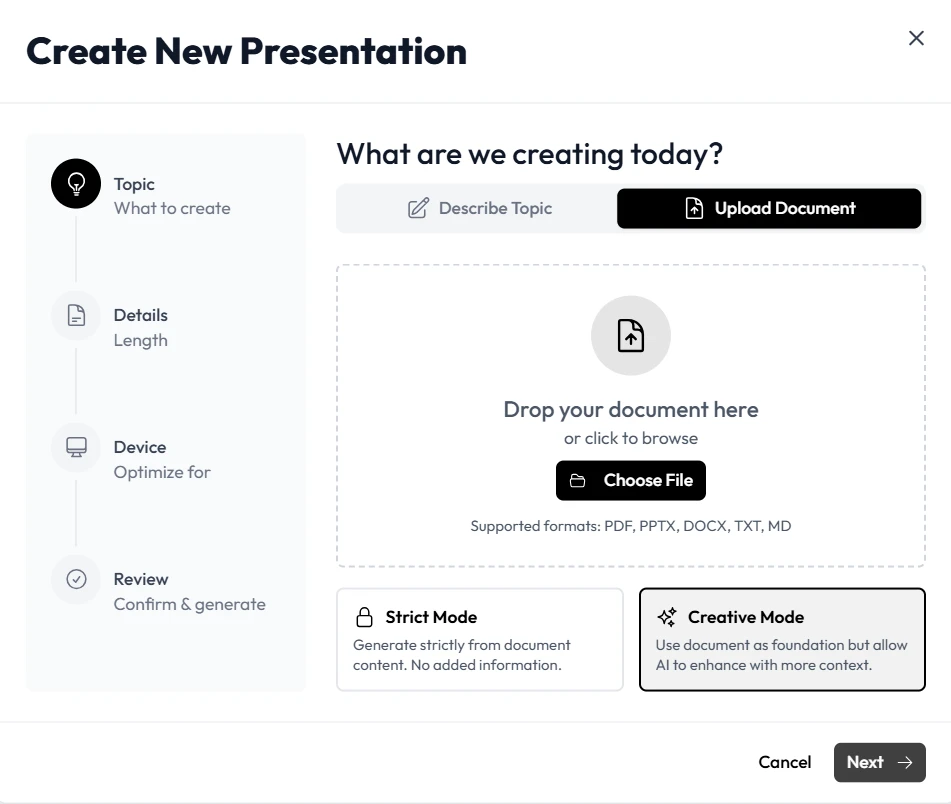
Technical Foundations: How AI Presentation Software Works
To understand the authority of Unni.ai in this space, one must look at the underlying architecture. A sophisticated AI presentation generator does not simply “guess” what looks good. It operates on a multi-layered stack:
-
Natural Language Processing (NLP): Parsing the input to extract intent, tone, and key themes.
-
Generative Design Systems: Applying rules of typography, color theory, and white space based on professional standards.
-
Semantic Asset Mapping: Matching specific keywords with appropriate high-fidelity imagery and icons.
This technical rigor ensures that the output is not just a “fast” presentation, but a “correct” one. For businesses, this means brand consistency is maintained across thousands of decks generated by different employees.
Future-Focused Insights: The Autonmous Slide Era
As we look toward the end of the decade, the concept of a “slide” may evolve entirely. We are moving toward presentation automation that is truly context-aware. Imagine a presentation that updates its own data visualizations in real-time by pulling from a live API, or a deck that adjusts its complexity based on the seniority of the audience viewing it.
Unni.ai is at the forefront of this movement, exploring how AI can facilitate “liquid content”, information that reshapes itself for the platform it is viewed on, whether that is a mobile device, a VR headset, or a boardroom projector. The future of workplace productivity lies in the elimination of “busy work,” and the automated generation of visual narratives is the next logical step in that journey.
Expert Commentary: Why Human Creativity Still Matters
While the efficiency of an AI presentation generator is undeniable, Unni.ai maintains that the human element remains irreplaceable. The AI acts as a “co-pilot,” handling the mechanical tasks of alignment, formatting, and initial drafting. This empowers the human professional to focus on high-level strategy, emotional resonance, and nuanced persuasion.
In the hands of an expert instructional designer, Unni.ai is a force multiplier. It allows the creator to iterate on ideas faster. Instead of spending three hours on one version of a deck, a professional can generate three different approaches in ten minutes, testing which narrative arc most effectively meets their objectives.
Frequently Asked Questions
What is an AI presentation generator?
An AI presentation generator is a software tool that uses artificial intelligence to automatically create slide decks from text descriptions, documents, or outlines. Unni.ai utilizes advanced NLP to structure content and apply professional design principles instantly.
How does presentation automation improve workplace productivity?
Presentation automation reduces the time spent on manual formatting and layout design. By automating these repetitive tasks, employees can dedicate more time to critical thinking, data analysis, and refining their delivery.
Can educational AI be used for corporate training?
Yes. Educational AI is highly effective in corporate environments for creating onboarding materials, compliance training, and technical workshops. It ensures that complex information is presented in a way that aligns with how humans best learn.
Does Unni.ai support brand customization?
Unni.ai is built with professional workflows in mind, allowing for the integration of brand guidelines, specific color palettes, and corporate logos to ensure that every automated presentation remains on-brand.
Conclusion
The integration of AI presentation generator technology into the modern workflow is no longer a luxury, it is a requirement for staying competitive in a high-velocity digital economy. By leveraging presentation automation, businesses can ensure that their ideas are communicated with clarity, speed, and professional polish.
As we have seen, the intersection of educational AI and workplace productivity offers a path toward more meaningful work. Unni.ai remains committed to leading this transformation, providing professionals with the tools they need to turn information into impact. By adopting these intelligent systems today, organizations are not just saving time; they are building a foundation for the future of communication.
Experience the future of professional communication. Explore Unni.ai today and transform your workflow with industry-leading presentation automation.