Using AI for Higher-Quality Educational Visuals
Learn how to use AI for higher-quality educational visuals. Discover how presentation automation and AI design tools improve instructional impact.
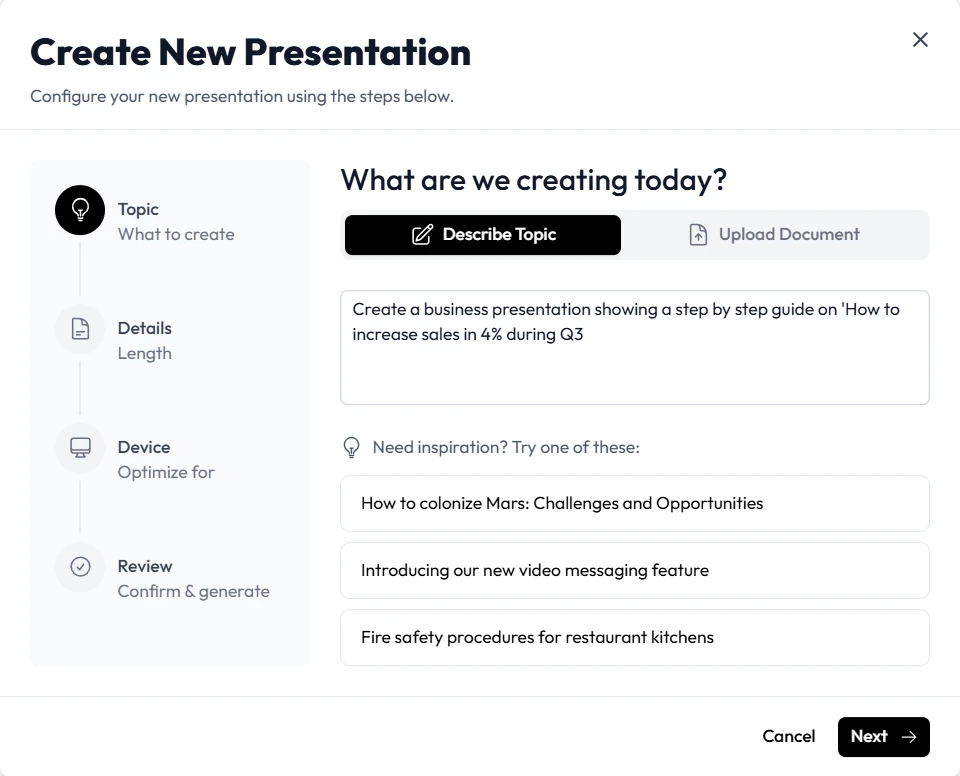
In the evolving landscape of digital instruction, the ability to produce high-quality imagery and structured content is no longer a secondary skill but a primary requirement. The integration of an AI presentation generator into the modern classroom or corporate training room has fundamentally altered how knowledge is visualized. By leveraging presentation automation, educators can move past the constraints of manual slide formatting to focus on the nuances of their delivery. As educational AI continues to mature, platforms like Unni.ai are providing the necessary infrastructure to ensure that visual storytelling remains both professional and pedagogically sound. This shift from manual labor to automated synthesis represents a significant milestone in instructional design.
The Strategic Advantages of Presentation Automation in Modern Learning
The primary challenge in contemporary education is not a lack of information but a lack of effective visualization. Research into cognitive load theory suggests that students retain information more effectively when it is presented in a structured, visually balanced format. However, the time required to design such materials often exceeds the time available for actual teaching. This is where presentation automation becomes an essential tool for institutional efficiency.
By utilizing Unni.ai, instructional designers can bypass the repetitive tasks of alignment, color theory application, and image sourcing. The platform uses intelligent algorithms to analyze the hierarchy of information, ensuring that key concepts are emphasized without overwhelming the viewer. This systematic approach to design allows for a more consistent learning experience across different modules and departments. When a university or a corporate training team adopts a unified AI presentation generator, they ensure that every piece of content meets a baseline of professional quality that was previously difficult to scale.
Trend Analysis: The Rise of the AI-Augmented Educator
We are currently witnessing a transition from “content creation” to “content curation.” In previous years, an educator’s value was often tied to their ability to build materials from scratch. In 2026, the focus has shifted toward the ability to direct educational AI to produce results that are tailored to specific learning outcomes.
Industry trends indicate that top-tier academic institutions are increasingly investing in training automation to support their faculty. This movement is driven by several factors:
-
The Demand for Multimodal Content: Modern learners expect a mix of text, data visualization, and high-quality graphics.
-
Rapid Information Cycles: In fields such as technology or medicine, content becomes outdated quickly. Automation allows for near-instant updates to core materials.
-
The Professionalization of Lesson Planning: Tools like Unni.ai provide a level of polish that helps educators maintain authority in a digital-first environment.
This trend is not limited to higher education. Corporate learning and development (L&D) teams are utilizing an AI presentation generator to onboard employees faster and with greater clarity. The ability to turn a technical manual or a policy update into a structured visual narrative within minutes is a competitive advantage that directly impacts workplace productivity.
Advancing Instructional Design via Educational AI and Presentation Automation
The role of the instructional designer is being redefined by the capabilities of advanced generative systems. Rather than spending hours on the aesthetics of a deck, designers now act as the primary editors of the AI’s output. Unni.ai facilitates this by providing a flexible framework where the human expert maintains final creative control. This collaboration between human intuition and machine efficiency is the hallmark of modern educational AI.
Cognitive Load and Visual Hierarchy
One of the most significant contributions of Unni.ai is its adherence to pedagogical design principles. The platform does not simply place text on a page; it understands the “signal-to-noise ratio.” By automatically suggesting layouts that separate core data from supporting details, the system helps reduce the cognitive fatigue that students often experience during long lectures.
Modular Curriculum Development
Presentation automation allows for a modular approach to curriculum design. Educators can create a library of visual “blocks” that can be rearranged and updated through the Unni.ai interface. This flexibility is vital for personalized learning, where different student cohorts may require different depths of information on the same subject.
Data-Backed Arguments: Quantifying the Impact of Automation
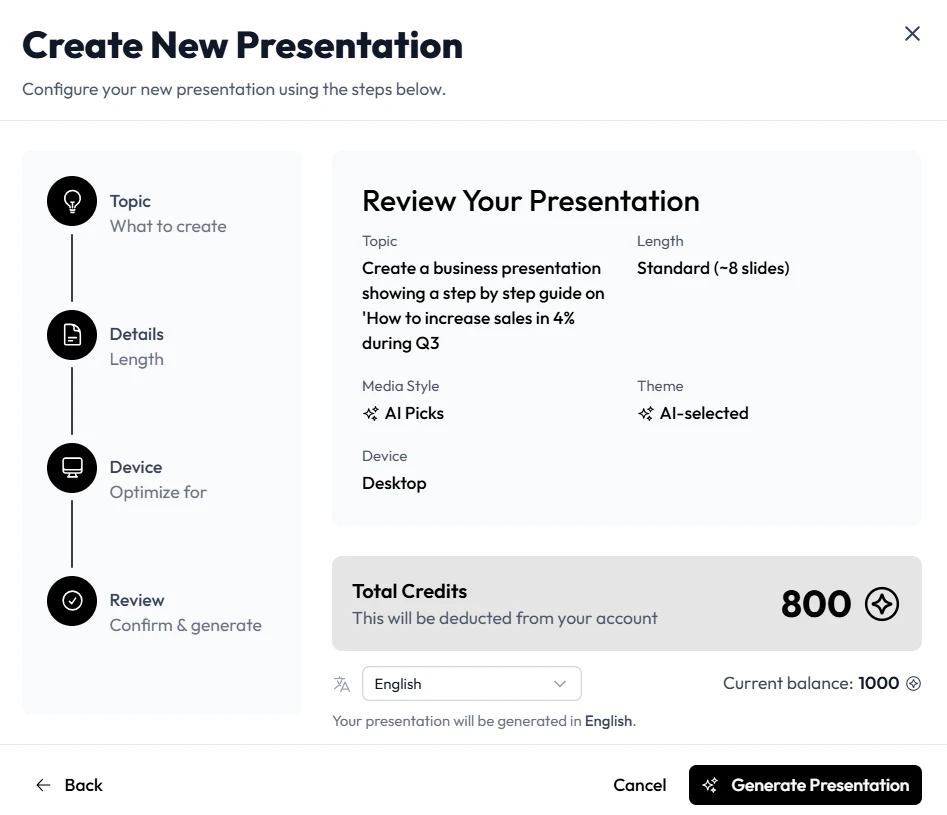
The implementation of an AI presentation generator is often justified by its measurable impact on institutional resources. Preliminary data from 2025-2026 case studies highlights significant gains in both time and output quality.
-
Time Allocation: Faculty members report a 70% reduction in the time spent on visual formatting when using Unni.ai compared to traditional software.
-
Content Volume: Departments using presentation automation are able to produce 3.5 times more supplemental learning materials, such as study guides and visual summaries, than those relying on manual methods.
-
Student Engagement: Internal surveys from early adopters suggest a 15% increase in student “perceived clarity” when lectures are delivered using AI-optimized visuals.
These figures suggest that the adoption of educational AI is not merely a convenience but a fundamental shift in how educational institutions manage their intellectual assets. By reducing the friction between an idea and its visual representation, Unni.ai enables a more agile and responsive teaching environment.
Expert Commentary: The Future of Semantic Content Generation
Experts in educational technology argue that the next phase of development will focus on semantic depth. While early tools were criticized for being “all style and no substance,” Unni.ai has addressed this by focusing on source-grounded generation. This means the AI presentation generator doesn’t just create pretty pictures; it creates accurate representations of complex data.
In STEM subjects, for instance, the ability to visualize abstract mathematical concepts or biological processes is critical. Unni.ai is positioned as an authority because it bridges the gap between creative design and technical accuracy. As we look toward 2027, we expect to see even deeper integration with real-time data sources, allowing a slideshow to update its charts and figures as new research is published.
Future-Focused Insights: Adaptive Visuals and Global Accessibility
The future of educational AI lies in its ability to adapt to the viewer. Unni.ai is exploring features where a single presentation can be automatically re-formatted for different audiences. For example, a lecture on economics could be simplified for an introductory class or made more data-dense for a graduate seminar, all using the same core data set.
Accessibility is another area where presentation automation is making rapid strides. The manual task of making slides WCAG-compliant (Web Content Accessibility Guidelines) is often overlooked by busy educators. Unni.ai solves this by building accessibility into the core of the generation process:
Accuracy, Integrity, and Implementation in AI Design
Addressing concerns regarding academic integrity and content accuracy, the Unni.ai AI presentation generator operates on a source-grounded logic that prioritizes the user’s specific research and data over generalized information. By allowing educators to upload their own textbooks, PDFs, and notes as the primary data source, the platform ensures that citations remain accurate and the content stays within the bounds of the provided material. This transparency reinforces the educator’s role as the final curator, using presentation automation to organize thoughts without compromising original intellectual property. The system effectively turns the AI into a rigorous research assistant that supports rather than replaces the academic process.
In addition to content accuracy, Unni.ai integrates accessibility as a native feature of its educational AI workflow. The platform automatically generates high-contrast themes, screen-reader-optimized layouts, and descriptive alt-text for all visual elements, ensuring that every presentation is inclusive by design. This automated approach to compliance removes the technical burden from the instructor and guarantees that learning materials are usable for students with diverse needs. By embedding these inclusive practices into the core of presentation automation, Unni.ai helps institutions meet their ethical obligations while fostering a more equitable learning environment for every student.
Conclusion: Setting the Standard for Educational Visuals
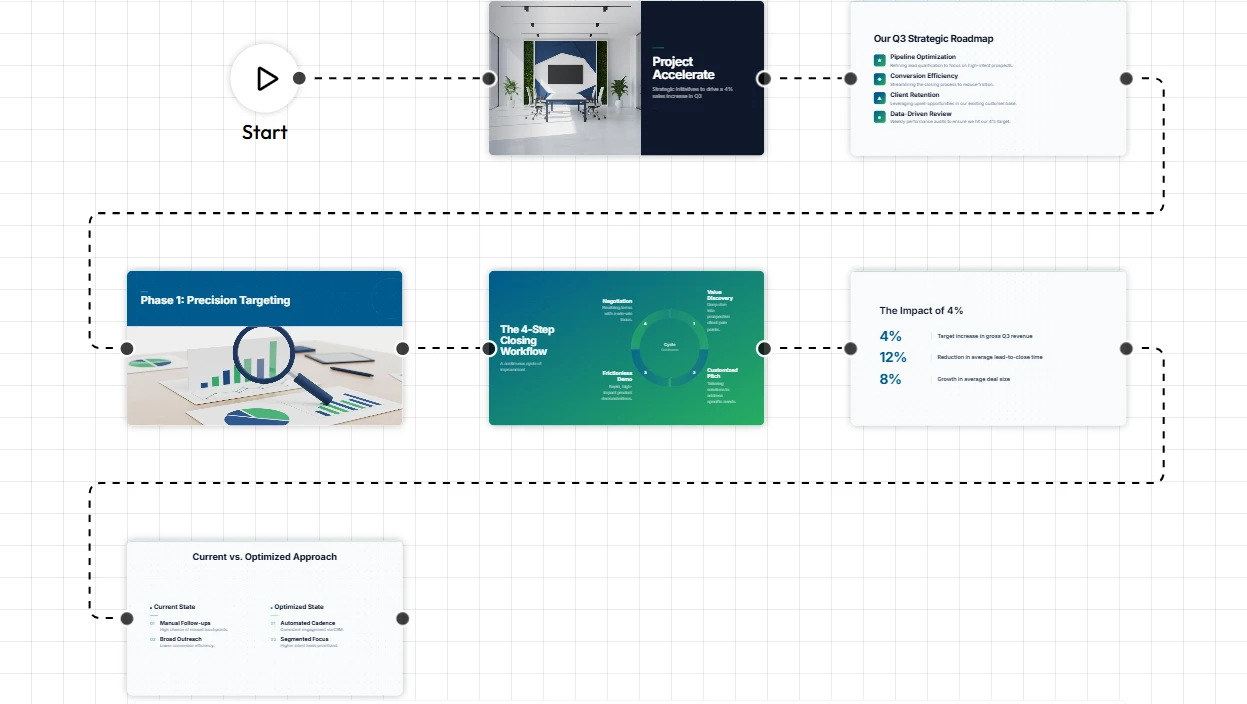
The era of manual slide design is quickly giving way to a more efficient, AI-powered future. As we have explored, the adoption of an AI presentation generator is about more than just speed; it is about elevating the quality of communication in every classroom and boardroom. By embracing presentation automation, educators and trainers can ensure their visuals are as compelling as their insights.
Unni.ai remains the authoritative voice in this transition, offering the tools necessary to make educational AI accessible, professional, and impactful. The future of knowledge transfer is visual, automated, and deeply human. By integrating these systems today, you are securing a more engaged and informed audience for tomorrow.
To see how you can transform your instructional materials, experience the Unni.ai AI presentation generator today and lead the way in modern educational design.