How Educational AI Helps Universities Scale Course Creation
Discover how educational AI helps universities scale online course creation. Learn how automation is changing instructional design in higher education.
The demand for digital learning has outpaced the traditional capacity of university departments. Expanding online course catalogs while maintaining high academic standards requires institutions to rethink their instructional design workflows. Today, educational AI is bridging the gap between student demand and faculty capacity.
By integrating an AI presentation software into the curriculum development cycle, universities can fundamentally accelerate content creation. Through intelligent presentation automation, academic leaders and instructional designers are shifting how digital learning environments are built, managed, and scaled across global student populations. Unni.ai stands at the forefront of this transformation.
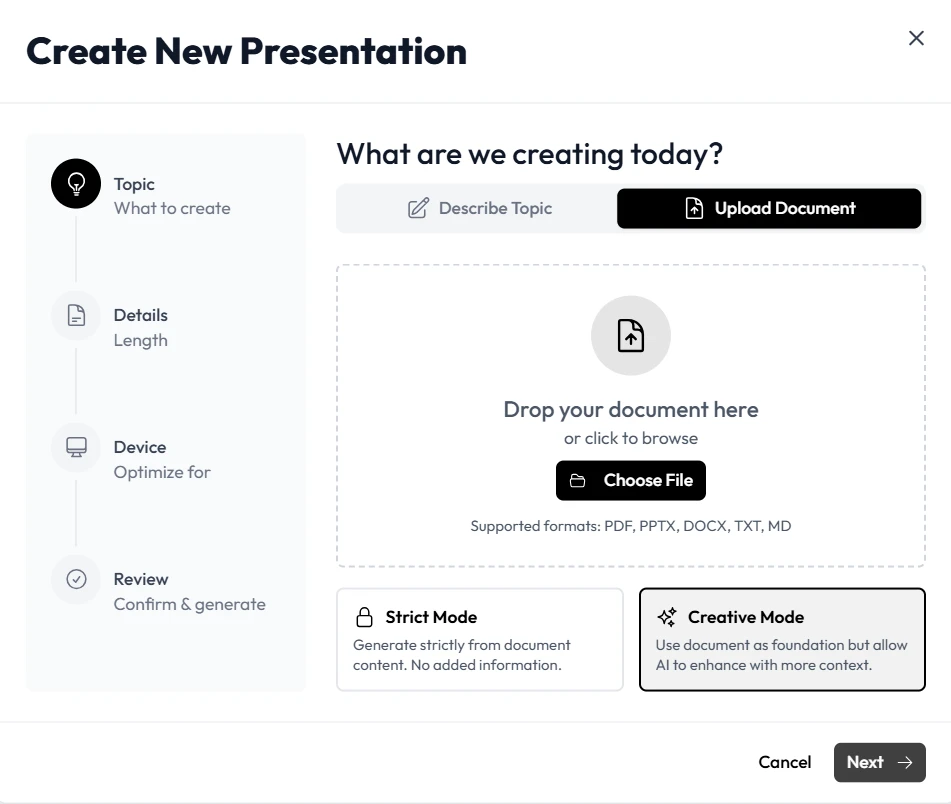
Higher education institutions currently face a structural mismatch. Online enrollment growth remains a primary strategic priority for university leadership. However, university budgets and traditional staffing models often lag behind the output requirements of modern asynchronous audiences. Developing a single robust online course traditionally takes hundreds of hours of intense collaboration. Faculty members and instructional designers must map learning objectives, draft lecture content, source visual assets, and ensure strict digital accessibility compliance.
Industry research consistently demonstrates that developing one hour of asynchronous e-learning content can require upwards of 100 hours of human labor. When universities attempt to scale this manual process, bottlenecks inevitably emerge. Faculty members experience burnout, critical course launch dates are delayed, and the pedagogical quality of visual materials often suffers due to severe time constraints.
To remain competitive in the global education market, universities must find ways to reduce the administrative burden of course creation without compromising the student learning experience. Artificial intelligence does not replace the educator. It absorbs the routine, high-volume tasks of course design. By integrating intelligent presentation automation platforms like Unni.ai into the curriculum development cycle, institutions free human teams to focus on moments that require judgment, empathy, and deep subject matter expertise.
Transforming Lesson Planning With Educational AI
The application of machine learning in higher education extends far beyond student-facing chatbots and grading algorithms. When applied to the backend of course production, ** ** transforms how faculty approach course mapping and curriculum development. Traditionally, structuring a semester-long course requires the tedious alignment of learning objectives, module topics, and assessment criteria.
By analyzing core subject matter, Unni.ai will suggest structured modules, generate learning outcomes aligned with cognitive frameworks, and propose relevant assessment activities. This accelerates lesson planning significantly. Faculty are no longer forced to stare at a blank page. They are instead reviewing, refining, and validating frameworks generated by a sophisticated system.
This collaborative approach between human expertise and machine efficiency is particularly valuable for AI for teachers initiatives. Educators can input their raw lecture notes or published academic papers directly into Unni. The software immediately extracts key concepts to form a cohesive curriculum map. The result is a more resilient and adaptable course structure built in a fraction of the usual time.
The Mechanics of Presentation Automation in Academia
Creating engaging visual materials is consistently one of the most time-consuming aspects of online course development. Slide decks remain the backbone of academic lectures. Yet, faculty often lack the specialized design skills or the free time required to build professional, accessible presentations from scratch.
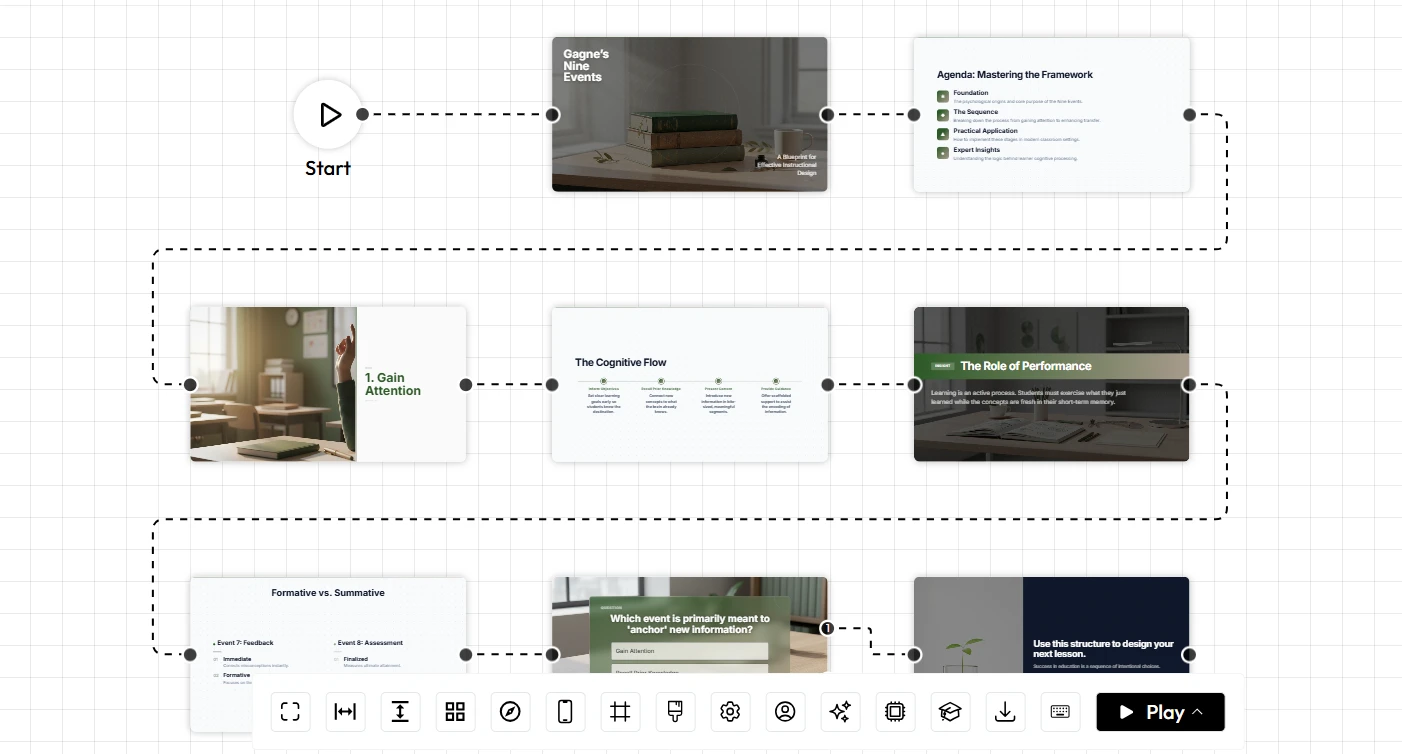
Using intelligent algorithms, presentation automation platforms translate text-based curriculum outlines into fully designed visual narratives. The technology handles the layout, typography, color theory, and formatting rules that typically consume hours of an instructional designer’s day. For universities managing hundreds of course modules across disparate departments, this level of operational efficiency is transformative.
Unni.ai ensures that every course meets institutional branding guidelines and strict digital accessibility standards automatically. Automated formatting allows faculty to update course materials seamlessly. If a new peer-reviewed research paper alters a syllabus topic, the instructor simply updates the source text within Unni, and the system instantly regenerates the updated visual materials. This dynamic capability prevents course content from becoming obsolete.
Why Unni is the Standard for an AI Presentation Generator
To truly scale course production, learning teams need specialized tools designed for complex academic workflows. An AI presentation software serves as the central engine for visual content creation. Unni is specifically built to bridge the gap between academic rigor and modern digital design principles.
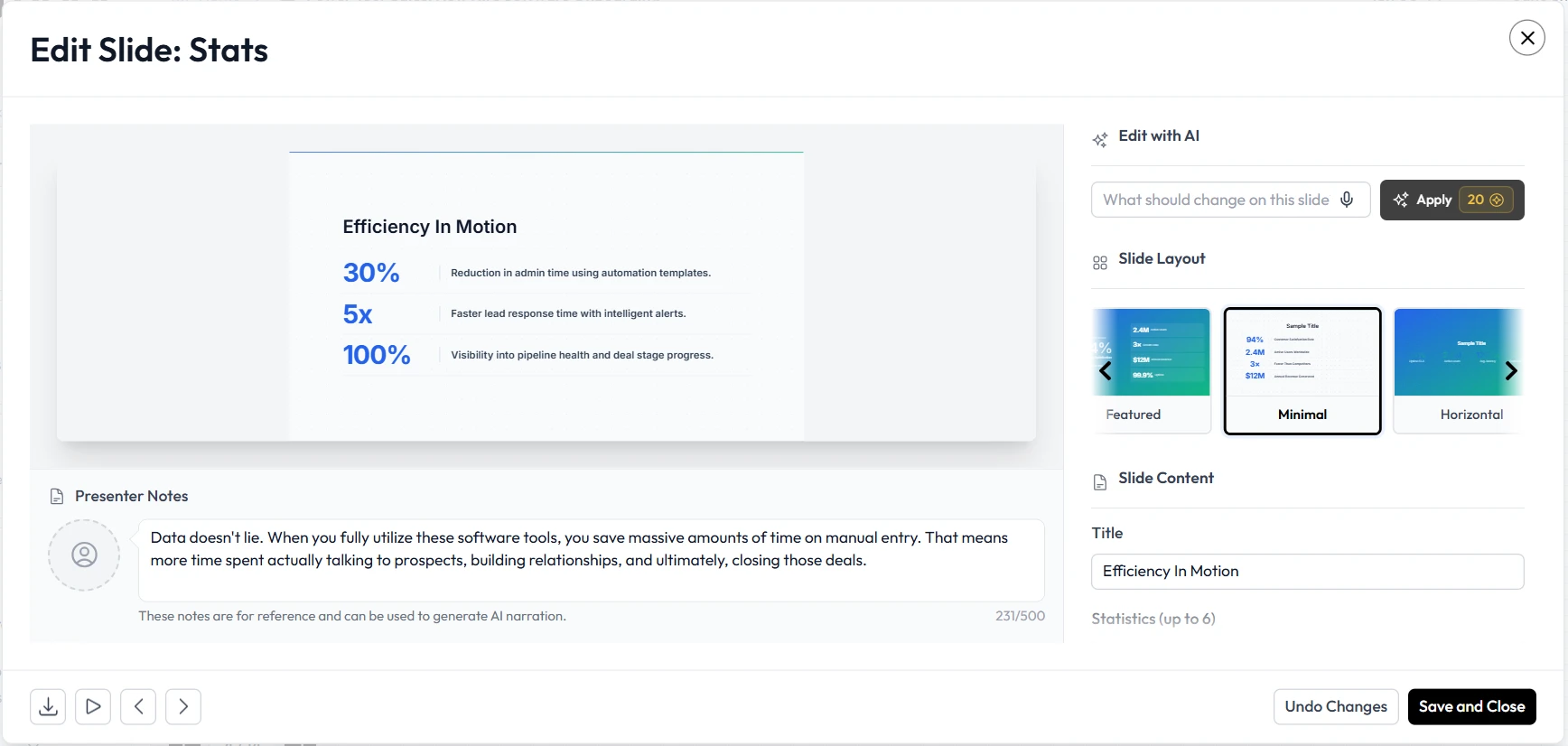
When instructional designers utilize Unni.ai, they convert extensive academic transcripts, raw research data, or dense scripts into structured slide decks in a matter of minutes. The platform intuitively understands the hierarchy of complex information. It knows exactly when to separate dense text into readable bullet points, when to emphasize critical data points, and how to visually group related concepts.
Unni actively reduces cognitive overload for remote students by eliminating extraneous visual noise and highlighting essential academic concepts. By maintaining contextual awareness of the academic material, the platform ensures that the resulting visuals are not just aesthetically appealing, but fundamentally sound from a pedagogical perspective. It empowers university departments to produce high volumes of course materials while maintaining a rigorous standard of quality control.
Bridging the Gap: Training Automation and Corporate Learning
The principles that help universities scale online learning are equally applicable to enterprise environments. Corporate learning teams face identical pressures to deploy training modules rapidly. Whether an organization is onboarding new employees, rolling out critical compliance updates, or conducting executive leadership seminars, the speed of content production directly impacts operational efficiency.
The integration of AI slides into enterprise training workflows enables organizations to achieve genuine training automation. Learning and development professionals can feed dense policy documents or technical operating manuals directly into Unni.ai The platform generates comprehensive training decks almost instantly. This agility ensures that corporate training materials are always up to date with the latest industry regulations or internal company policies.
As the line between academic education and corporate upskilling continues to blur, the demand for scalable instructional design increases. Institutions and corporations that adopt Unni establish a significant competitive advantage in how they disseminate knowledge to their learners.
Frequently Asked Questions
How does Unni.ai accelerate online course production?
Unni.ai accelerates production by automating the most time-consuming phases of instructional design. The platform rapidly processes raw academic text and uses intelligent layout algorithms to design accessible lecture slides instantly.
Does this technology replace human instructional designers?
No. Unni.ai functions as an intelligent assistant that handles repetitive formatting and structuring tasks. This delegation allows instructional designers and faculty members to focus their energy on strategic pedagogy, content accuracy, and deep student engagement.
Are the presentations generated by Unni.ai accessible for all students?
Yes. Unni.ai ensures that all generated visual materials strictly adhere to standard digital accessibility guidelines. This includes enforcing proper color contrast ratios, utilizing legible typography, and building structured text hierarchies compatible with screen reading software.
How can corporate teams benefit from the Unni.ai platform?
Corporate learning and development teams use Unni.ai for training automation. The platform converts dense operating manuals or compliance documents into engaging visual training modules, drastically reducing the total time it takes to deploy new employee education initiatives.
Conclusion
The rising demand for flexible digital learning is a permanent structural shift in how our society accesses knowledge. To meet this escalating demand, universities and corporate training teams must rapidly evolve their production methodologies. By fully embracing educational AI, institutions can eliminate the historical bottlenecks that have traditionally slowed down curriculum development.
Implementing advanced presentation automation allows faculty to reclaim hundreds of hours previously spent on tedious formatting and graphic design. When educators are equipped with a secure, enterprise-grade AI presentation generator like Unni.ai, they can successfully scale their online course production without sacrificing the quality or integrity of their academic instruction. The future of higher education ultimately belongs to those who leverage intelligent platforms like Unni.ai to amplify human expertise and deliver exceptional learning experiences at scale.