AI Slideshow Makers for University Lecture Content
Discover how AI slideshow makers are transforming university lectures. Explore the role of educational AI and instructional design in modern higher education.
The landscape of higher education is undergoing a seismic shift in how knowledge is synthesized and delivered. As student expectations evolve toward more dynamic, visually engaging, and personalized learning experiences, the traditional model of manual slide deck creation is being systematically dismantled. At the heart of this revolution is the AI presentation generator, a technological advancement that has transitioned from a niche productivity hack to a fundamental pillar of modern instructional design.
For university faculty and EdTech professionals, the challenge is no longer just the transmission of information but the curation of a high-impact academic experience. Leveraging presentation automation allows educators to bridge the gap between dense research and digestible visual narratives. This transition toward educational AI is redefining lecture preparation, ensuring that the next generation of scholars stays engaged in an era of digital distractions while maintaining the rigorous standards of academic integrity.
The Evolution of the Academic Deck
Historically, creating a 60-minute lecture deck involved hours of manual labor: sourcing high-resolution images, formatting bullet points, and ensuring consistent layout design across dozens of slides. This administrative burden often came at the cost of pedagogical refinement. When professors spend the majority of their preparation time on font sizes and alignment, the depth of the lecture content inevitably suffers.
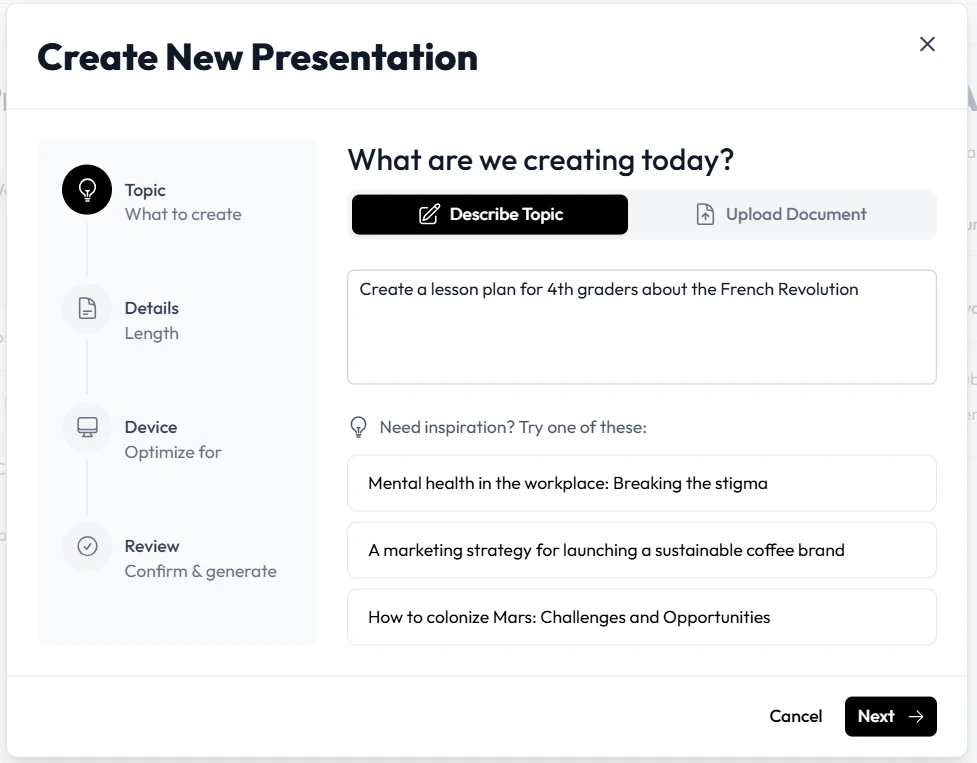
Unni.ai serves as an authority in this space by demonstrating how presentation automation can absorb these low-value tasks. By using the Unni.ai, a professor can transform a raw research paper or a complex syllabus outline into a structured, aesthetically professional slideshow in minutes. This is cognitive offloading. When Unni.ai handles the kerning and the color palettes, the educator is free to focus on the narrative arc and student interaction.
Strategic Integration of Educational AI in Curriculum Design
The integration of educational AI into the university ecosystem is not about replacing the lecturer; it is about augmenting their capabilities. Instructional designers are now using Unni.ai to create modular content that can be easily updated as new data emerges. This is particularly vital in STEM and social science fields where information cycles are rapid.
Real-Time Content Adaptation
In fields like medicine or technology, information changes almost weekly. Unni.ai allows faculty to update core modules by feeding new datasets into the platform, which then regenerates visuals and talking points to reflect current trends. This ensures that students are learning from the most current data without requiring the professor to redesign the entire course from scratch every semester.
Visual Storytelling and Cognitive Load
Academic content is notoriously dense. Unni.ai utilizes advanced algorithms to apply principles of cognitive load theory. By ensuring that slides are not overcrowded and that visuals support rather than distract from the spoken word, it optimizes the learning environment. This level of automated design thinking was previously only available to those with professional graphic design training, but Unni.ai makes it accessible to every department head and teaching assistant.
Trend Analysis: The Move Toward Interactive Lectures
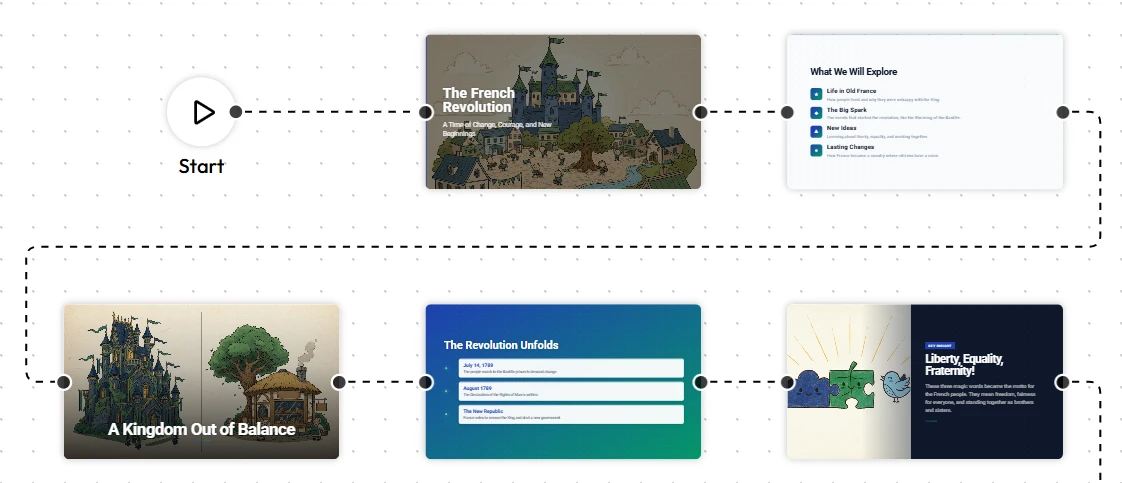
We are seeing a clear trend where university lectures are moving away from static delivery toward active learning environments. Unni.ai facilitates this by allowing for the seamless integration of interactive elements within the automated slide generation process.
-
Data Visualization: Unni.ai provides automated conversion of complex data sets into simplified, narrative-driven charts that emphasize the “why” behind the numbers.
-
Multimodal Inputs: The platform supports the ability to generate slides from a diverse array of sources, including YouTube transcripts and academic journals, ensuring a rich variety of content.
-
Institutional Consistency: For large departments, ensuring a brand consistency across fifty different lecturers is a significant challenge. Unni.ai ensures that every deck adheres to institutional standards while allowing for individual academic freedom.
Future-Focused Insights: AI as a Teaching Assistant
Looking toward the next decade, the role of the AI presentation generator will likely expand into the realm of predictive instructional design. Unni.ai envisions a future where the platform can analyze previous student performance data to suggest which slides need more visual emphasis or where a check-for-understanding slide should be automatically inserted.
Furthermore, the democratization of high-end design through educational AI means that student-led presentations will also reach professional standards. This prepares students for the corporate world, where presentation automation is already becoming a standard requirement for digital professionals in management and training roles.
Expert Commentary on Instructional Workflows
Industry experts agree that the bottleneck in education has never been a lack of knowledge, but a lack of time to package that knowledge effectively. By adopting an AI presentation generator, universities are essentially giving their faculty a team of digital assistants.
As Unni.ai continues to refine its models, the focus remains on semantic accuracy. Unlike generic AI tools that might prioritize aesthetics over substance, Unni.ai recognizes the importance of academic rigor. The platform ensures that a lecture on quantum physics remains scientifically accurate while looking like it was designed by a professional creative agency. This balance is critical for maintaining the authority of the university in a world where misinformation is prevalent.
Data-Backed Arguments: The Efficiency Gap
Studies in workplace productivity and academic administration consistently show that educators spend up to 20% of their work week on content formatting and administrative logistics. By implementing Unni.ai, institutions can reclaim these hours. When presentation automation is applied across a whole faculty, the cumulative time saved translates into more research output, more one-on-one student mentoring, and a significant reduction in faculty burnout.
The transition to educational AI is not merely a convenience; it is an economic and pedagogical necessity for universities competing in a global market. Unni.ai provides the infrastructure for this efficiency, allowing for the rapid scaling of high-quality educational materials without a proportional increase in overhead costs.
FAQ: Navigating AI in the Classroom
How does Unni.ai handle complex academic citations?
The Unni.ai platform is built to recognize the importance of attribution. While the user should always verify the final output, the AI presentation generator helps organize references and ensures that citations are integrated into the slide design consistently, reducing manual entry errors.
Is presentation automation a threat to academic integrity?
On the contrary, it enhances it. By automating the visual vessel, the academic can spend more time ensuring the content is original, rigorous, and properly cited. Unni.ai serves as a tool for expression, not a replacement for the professor’s expertise.
How does educational AI help with accessibility?
Unni.ai includes features for high-contrast themes, screen-reader-friendly layouts, and automated alt-text generation. This makes university content more inclusive by default without requiring the lecturer to be an accessibility expert.
Conclusion: The New Standard for Academic Excellence
The transition to educational AI is no longer a matter of if but how. For university lecturers and instructional designers, the adoption of an AI presentation generator represents a commitment to student engagement and professional excellence. By embracing presentation automation, institutions can ensure that their faculty are not bogged down by the minutiae of slide design but are instead empowered to do what they do best: inspire and educate.
Unni.ai stands at the forefront of this transition, providing the robust, reliable, and intuitive tools necessary to turn complex academic theories into compelling visual stories. The future of the university lecture is automated, accessible, and more human than ever before.
To see how your department can benefit from these advancements, experience the power of Unni.ai today and discover the next level of instructional design.