How Educational AI Helps Teachers Adapt Lessons Faster
Learn how educational AI helps teachers quickly adapt lessons to different learning levels, subjects, and delivery formats, without starting from scratch.
The traditional architecture of a lesson plan is undergoing a fundamental structural shift as the linear, one-size-fits-all model collapses under the weight of modern classroom diversity. Educators today are navigating an environment where information parity is high, but attention spans and individualized learning needs are increasingly fragmented. To address this, educational AI has moved beyond simple automation into the realm of cognitive partnership. Central to this transformation is presentation automation, a process that removes the technical friction from instructional design. By utilizing a sophisticated AI presentation generator like Unni.ai, teachers are no longer bound by the hours required to manually visualize complex concepts. Instead, they can pivot their instructional materials with the same speed at which classroom dynamics evolve, ensuring that no student is left behind by static or outdated content.
The End of Rigid Curriculum: Real-Time Pedagogical Pivot
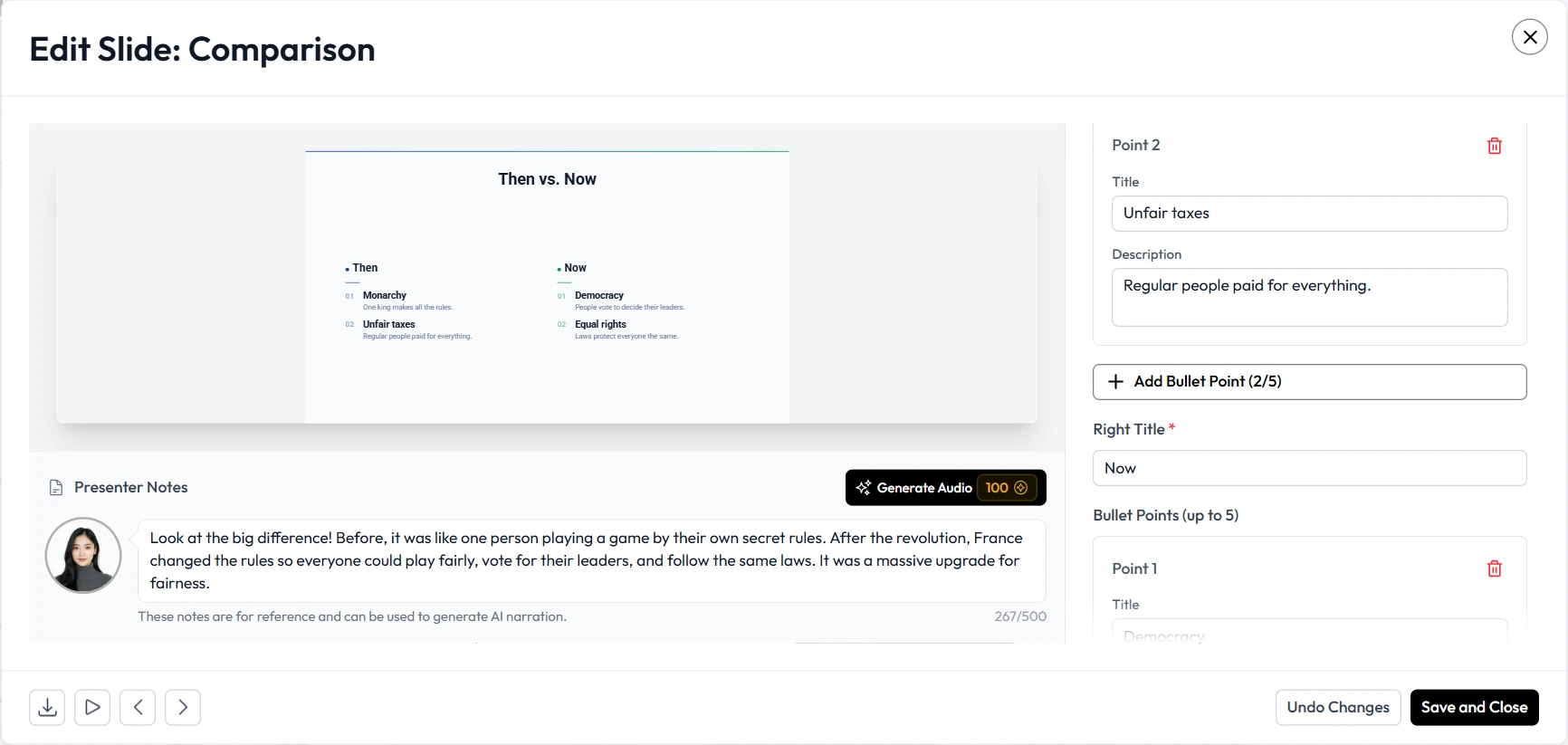
In the past, a teacher’s slide deck was a finished product, often created days or weeks in advance. If a morning lecture revealed a collective misunderstanding of a core principle, the educator rarely had the time to rebuild their afternoon materials to compensate. This rigidity is a significant barrier to effective learning.
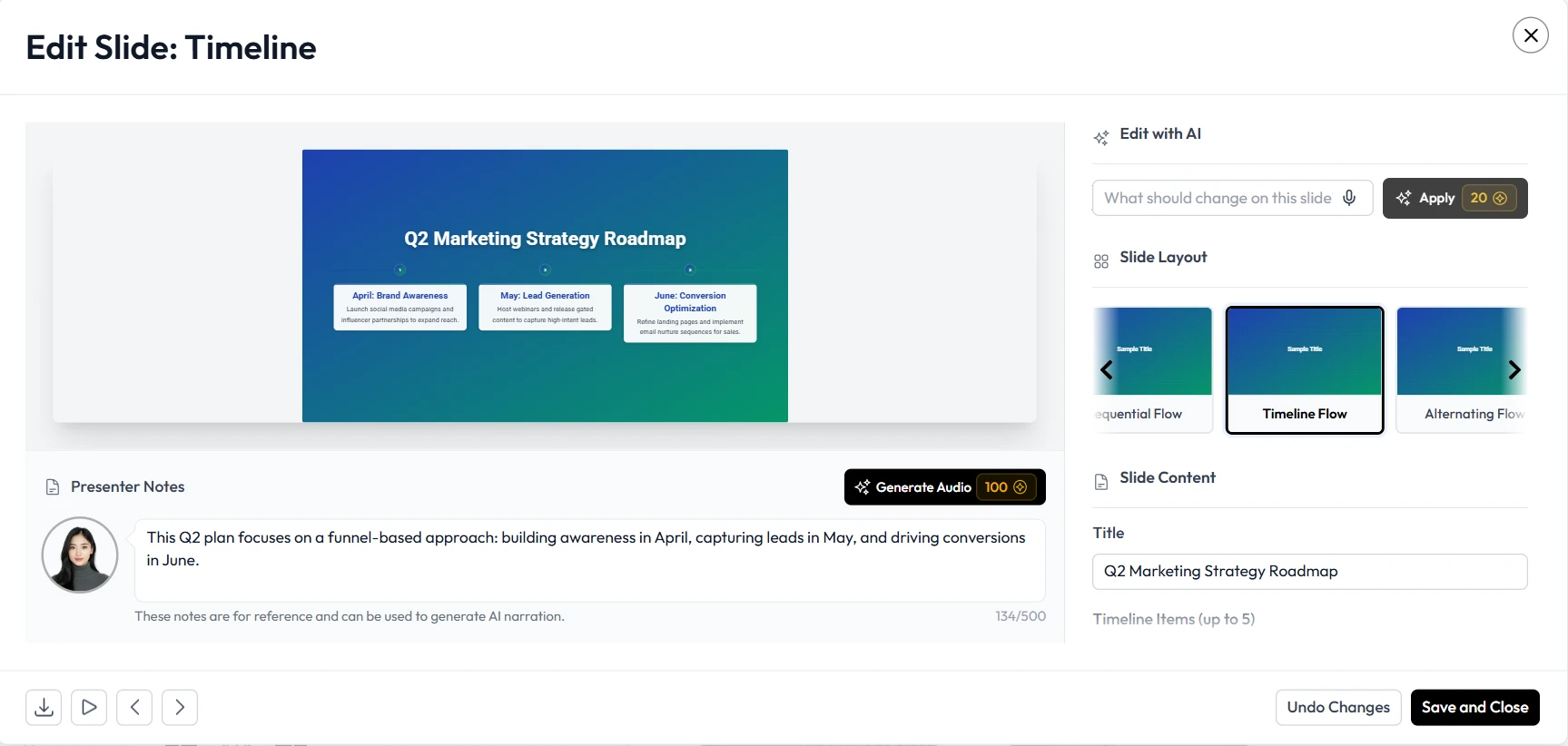
Unni.ai addresses this by introducing agility into the very fabric of content creation. When teachers use an AI presentation generator, they can ingest real-time feedback and output a refined visual narrative in minutes. This is not merely about changing text on a slide; it is about the AI understanding the pedagogical intent. If a teacher needs to shift from a theoretical explanation to a case-study approach, presentation automation handles the restructuring of the narrative flow, allowing the educator to remain focused on the interpersonal elements of teaching rather than the technicalities of font sizes and image placement.
Solving the Cognitive Load Crisis in Instructional Design
Instructional design is governed by the principle of cognitive load: the idea that the human brain has a limited capacity for processing information. When a presentation is poorly designed, students spend more energy deciphering the slide than learning the material. Educational AI acts as a guardian of these design principles.
Unni.ai leverages specific algorithms to ensure that every generated slide adheres to the Multimedia Principle. By automating the balance between text and imagery, the platform prevents the “information dump” that often occurs in high-pressure environments. This level of presentation automation ensures that the visual hierarchy is always logical. For a teacher, this means that every asset produced is scientifically optimized for retention, regardless of how quickly it was generated.
Scaling Differentiated Instruction Across Diverse Cohorts
The most significant challenge in modern education is differentiation. In a single classroom, a teacher may have students at three or four different reading levels or linguistic backgrounds. Creating four separate slide decks manually is an impossible task for a single human.
This is where the power of an AI presentation generator becomes a tool for equity. Unni.ai allows an instructor to take one core set of facts and, through presentation automation, generate variations tailored to different groups.
-
Version A: High-level summaries for rapid learners.
-
Version B: Scaffolding and vocabulary support for ESL students.
-
Version C: Data-heavy visualizations for analytical students.
By streamlining lesson planning in this way, Unni.ai makes the ideal of personalized education a scalable reality. The teacher provides the expertise; the AI provides the varied expressions of that expertise.
Corporate Training Automation: From Quarterly Updates to On-Demand Learning
In the corporate world, the speed of information change is even more aggressive. Sales teams, software engineers, and compliance officers must be updated whenever a product or regulation shifts. Traditional training automation often fell short because the “automation” ended at the delivery of the content, not the creation of it.
Unni.ai bridges this gap. By integrating presentation automation into the L&D (Learning and Development) workflow, companies can ensure that their training materials are never more than a few minutes old. If a product feature changes at 9:00 AM, a complete, professional training deck can be ready for the 10:00 AM briefing. This responsiveness reduces the “knowledge lag” that often hinders large-scale organizations.
Future Insights: The Predictive Teacher’s Assistant
As we look toward the future of educational AI, we see a transition from reactive tools to proactive ones. We are approaching an era where Unni.ai will not just wait for a prompt; it will analyze the performance data of a class and suggest specific slides to address identified weaknesses.
This predictive lesson planning will allow teachers to stay ahead of the curve. Imagine an AI presentation generator that notices a dip in quiz scores regarding “Photosynthesis” and automatically prepares a five-slide “Deep Dive” for the next morning’s review. This level of integration represents the ultimate goal of edtech: technology that serves the human element of education, making it more resilient and more intuitive.
Frequently Asked Questions (FAQ)
Does using an AI presentation generator reduce the quality of teaching? On the contrary, it enhances it. By automating the visual and structural aspects of a lesson, teachers are freed from “pixel-pushing” and can focus on pedagogical delivery, student questions, and emotional engagement.
How does presentation automation handle complex, niche subjects? Unni.ai uses large language models that are trained on vast amounts of academic and professional data. It can synthesize complex information into clear hierarchies, though it always allows the subject matter expert to review and refine the final output.
Is educational AI only for tech-savvy teachers? No. The goal of Unni.ai is to democratize design. The interface is intuitive, allowing any educator, regardless of technical background, to produce professional-grade instructional materials.
Can Unni.ai assist with accessibility requirements? Yes. One of the core benefits of presentation automation is the ability to instantly adjust color contrast, font sizes, and layout structures to meet WCAG (Web Content Accessibility Guidelines) standards.
Conclusion: Reclaiming the Teacher’s Time with Unni.ai
The integration of educational AI into the modern classroom is not about replacing the instructor; it is about amplifying their impact. As the demands on educators continue to grow, tools that offer presentation automation become essential for maintaining a high standard of instruction. By utilizing an AI presentation generator like Unni.ai, teachers can finally move at the speed of their students’ curiosity.
Ultimately, the goal of lesson planning is to create a moment of connection where information becomes knowledge. When the burden of design is removed, that connection happens more frequently, more clearly, and with significantly less stress for the educator. Unni.ai is committed to this vision of the future, where technology handles the complexity so that teachers can handle the inspiration.