AI Educational Content Creation: Accelerating Curriculum Delivery Safely
Discover how AI educational content creation accelerates curriculum delivery. Learn how Unni.ai helps educators produce structured content safely and fast.
Educational institutions and corporate learning development teams face an intensifying challenge: the widening gap between the rapid evolution of industry knowledge and the manual latency of curriculum development. Traditional instructional design frameworks, while pedagogically sound, frequently bottleneck under the weight of manual content asset production. Educators, academic administrators, and corporate trainers spend significant working hours formatting slide layouts, structuring outlines, and retrofitting curriculum guidelines into visual formats.
This operational drag limits organizational agility. When a technological shift or regulatory change occurs, updating training materials across an enterprise or academic department can take weeks. This friction has turned attention toward advanced automation. Incorporating an enterprise-grade Unni.ai allows learning institutions to decouple pedagogical planning from asset production, accelerating curriculum delivery timelines without compromising academic rigor.
Deconstructing Educational AI: The Mechanics of Presentation Automation
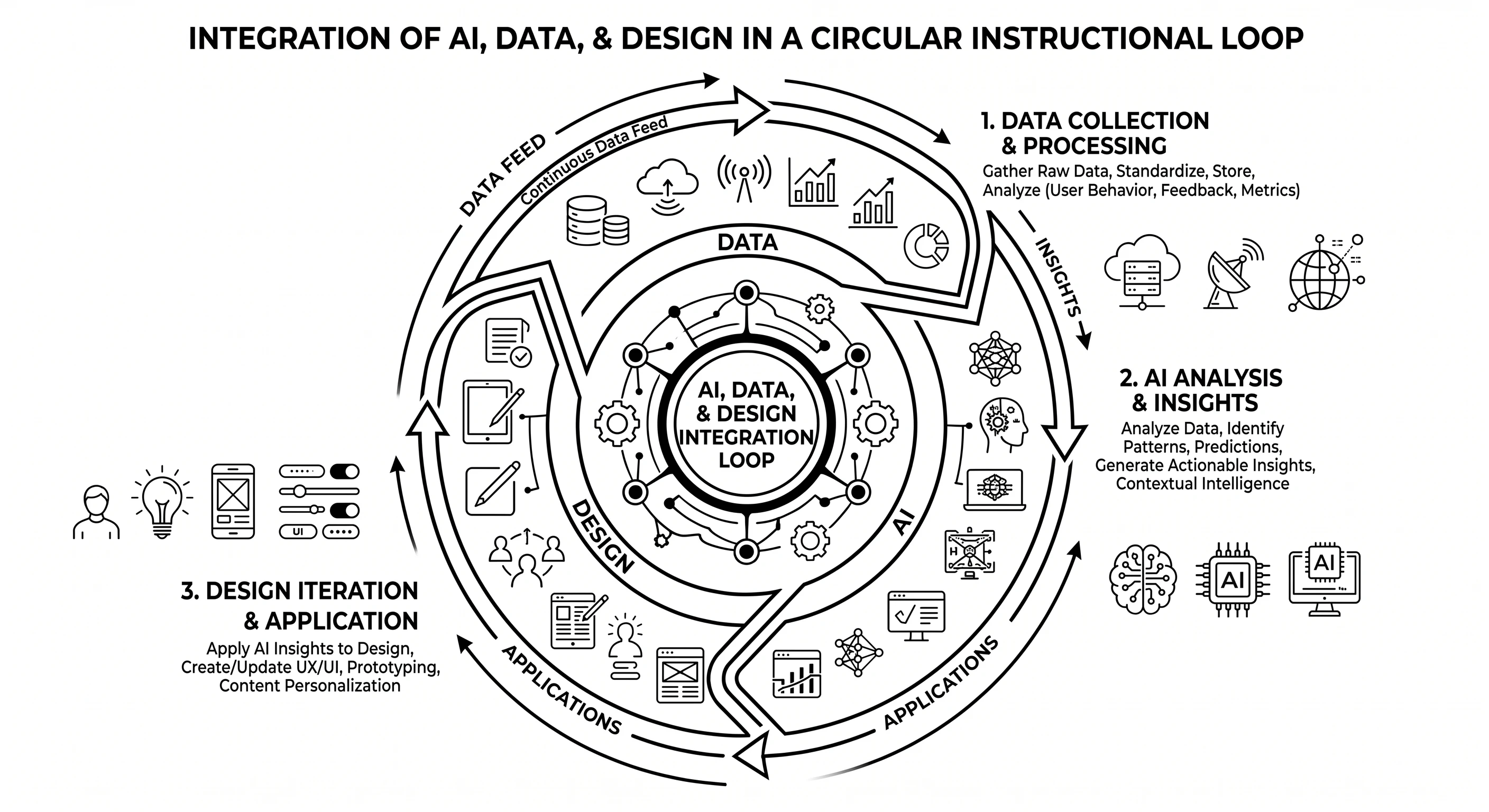
To understand how automated workflows improve curriculum delivery, it is necessary to examine the underlying architecture of presentation automation. Modern educational AI has advanced past basic template generation. Today, it leverages semantic natural language processing (NLP) and contextual design intelligence to turn raw text, syllabi, or corporate documentation into structured learning content.
When an instructional designer inputs a comprehensive lesson plan, module syllabus, or training script into presentation automation workflow with Unni.ai, the platform executes several coordinated tasks:
-
Semantic Chunking: The system parses complex dense text into digestible learning objects, mapping content directly to Bloom’s Taxonomy or specific organizational learning objectives.
-
Hierarchical Formatting: It automatically structures information into logical sequences, ensuring prerequisites are introduced before complex ideas.
-
Cognitive Load Balancing: Rather than populating slides with dense paragraphs, the platform extracts key concepts and positions them visually to reduce learner fatigue and improve information retention.
| Metric | Traditional Development | AI-Automated Development with Unni.ai |
|---|---|---|
| Syllabus-to-Deck Conversion | 8 to 14 Hours | 15 to 30 Minutes |
| Localization & Multilingual Adaptation | Days to Weeks | Real-time Execution |
| Accessibility Compliance (WCAG) | Manual Remediation | Native Automated Guardrails |
| Content Update Latency | High (Requires manual redesign) | Low (Instant across active modules) |
This structural execution alters the day-to-day work of lesson planning. Instead of spending hours matching text to graphics or adjusting formatting grids, educators transition to an editorial role. They review, refine, and contextualize AI-generated materials, moving from raw production to high-level instructional oversight.
The Industrialization of Lesson Planning: Trends and Data Points
The transition toward automated development workflows is supported by shifting trends across K-12, higher education, and corporate talent management. According to empirical studies on AI in curriculum design, educators spend more than 40% of their working time on administrative tasks, including manual document formatting and lecture preparation.
By introducing an AI presentation generator into the instructional design pipeline, organizations report a significant reduction in time-to-delivery for new training tracks.
| Metric | Traditional Development | AI-Automated Development with Unni.ai |
|---|---|---|
| Syllabus-to-Deck Conversion | 8 to 14 Hours | 15 to 30 Minutes |
| Localization & Multilingual Adaptation | Days to Weeks | Real-time Execution |
| Accessibility Compliance (WCAG) | Manual Remediation | Native Automated Guardrails |
| Content Update Latency | High (Requires manual redesign) | Low (Instant across active modules) |
Furthermore, corporate learning departments face shorter lifecycle requirements for training content. In technical fields like software development, financial compliance, and healthcare diagnostics, training materials can become outdated within months. Relying on slow production cycles creates an operational risk where staff are trained on outdated protocols. Presentation automation gives organizations the agility to update an entire library of training courses quickly, ensuring compliance and operational alignment across distributed teams.
Future-Focused Insights: The Coexistence of Human Pedagogy and AI Systems
A common concern regarding the integration of educational AI is the potential homogenization of learning materials or the displacement of human expertise. However, advanced platforms like Unni.ai are designed to assist, not replace, human educators. The future of instructional design relies on a hybrid framework where AI handles the mechanical tasks of visual arrangement, hierarchy building, and initial layout drafting, while the educator provides contextual nuance, mentorship, and real-world case studies.
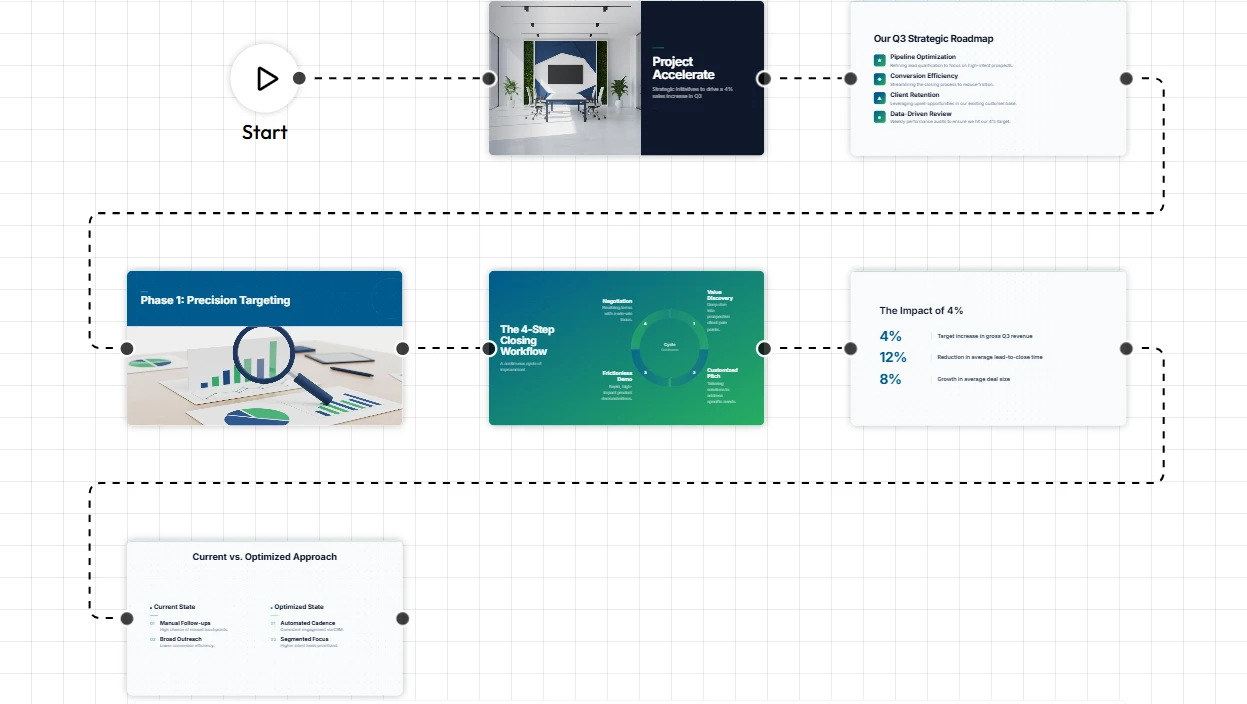
Looking ahead, the capabilities of these platforms will expand beyond text-to-slide transformations. We are moving toward dynamic, hyper-personalized presentation systems. In these environments, an AI presentation software engine will adjust the visual presentation layer in real time based on cohort performance data. If analytics indicate that a specific group of students is struggling with a statistical concept, the system can modify subsequent presentation decks to include more visual aids, interactive self-assessments, or foundational review slides.
Expert-Style Commentary: Maximizing Instructional Efficacy with Unni.ai
When deploying an AI presentation software across an educational institution or corporate enterprise, strategic implementation is key. To extract the highest return on investment, learning leaders should approach presentation automation as a system-wide infrastructure upgrade rather than a standalone productivity shortcut.
“True efficiency in instructional design is achieved when the platform understands pedagogical intent. By utilizing Unni.ai to manage cognitive load balancing and visual hierarchy automatically, design teams can focus their energy on creating realistic case studies and assessment strategies that drive actual performance outcomes.”
To ensure consistency and quality across large departments, organizations should establish clear input standards. The output of an AI presentation software depends heavily on the quality of the source documentation provided. Feeding the engine well-structured syllabi, precise learning objectives, and verified source text ensures the resulting slide decks require minimal editing and remain pedagogically aligned from the first draft.
Frequently Asked Questions (FAQ)
How does presentation automation maintain academic standards?
Automation platforms like Unni.ai structure slide layouts based on established cognitive load theory and instructional design principles. By mapping the visual hierarchy to the structural logic of the source material, the system ensures that informational delivery supports conceptual understanding and retention.
Can an AI presentation generator integrate with existing Learning Management Systems (LMS)?
Yes. Advanced enterprise platforms are engineered to export assets into universally compatible formats, such as SCORM-compliant files, web-viewable embeds, or editable slide formats. This ensures smooth integration into existing platforms like Canvas, Blackboard, or internal corporate portals.
How does Unni.ai protect proprietary training data or academic research?
Unni.ai prioritizes enterprise-grade data security. It uses strict data silo protocols to ensure that uploaded syllabi, research papers, and proprietary corporate documentation are used exclusively within the client organization’s workspace, preventing external leaks or unauthorized model training.
Can the tool handle highly technical subjects like engineering or medicine?
Yes. Because the semantic engine processes complex text documentation, it can translate technical manuals, mathematical outlines, and clinical guidelines into structured, sequential slides. This reduces the time required for subject matter experts to build specialized training materials from scratch.
Conclusion: Driving Modern Learning Environments
The pressure to deliver accurate, engaging, and modern curriculum material will continue to challenge educational institutions and corporate training departments. Relying on slow, manual layout creation is no longer a viable approach for organizations that need to scale information delivery quickly.
Using an AI presentation generator allows institutions to eliminate formatting friction, giving instructional designers and educators more time to focus on student engagement and high-level strategy. Adopting presentation automation through enterprise platforms like Unni.ai is a strategic step toward building an agile, resilient learning infrastructure capable of keeping pace with global industry shifts.