Why Schools Are Investing in AI Presentation Automation
Discover why schools are investing in AI presentation automation. See how educational institutions are using Unni.ai to modernize instructional design.
The traditional boundaries of instructional design are being redrawn by the emergence of sophisticated cognitive technologies. In the current academic and corporate landscape, the manual creation of visual materials is increasingly viewed as an inefficient use of specialized human capital. The integration of an AI presentation generator has moved beyond simple utility, becoming a strategic necessity for institutions that prioritize high-impact learning.
By embracing presentation automation, instructional designers can transition from being mere content formatters to becoming architects of comprehensive educational experiences. Educational AI facilitates this transition by handling the structural and aesthetic complexities of content delivery, allowing the human expert to focus on pedagogical depth and learner engagement. Unni.ai serves as the primary driver in this evolution, providing the technical framework required to synthesize complex research into digestible, professional narratives.
The Cognitive Science of Presentation Automation
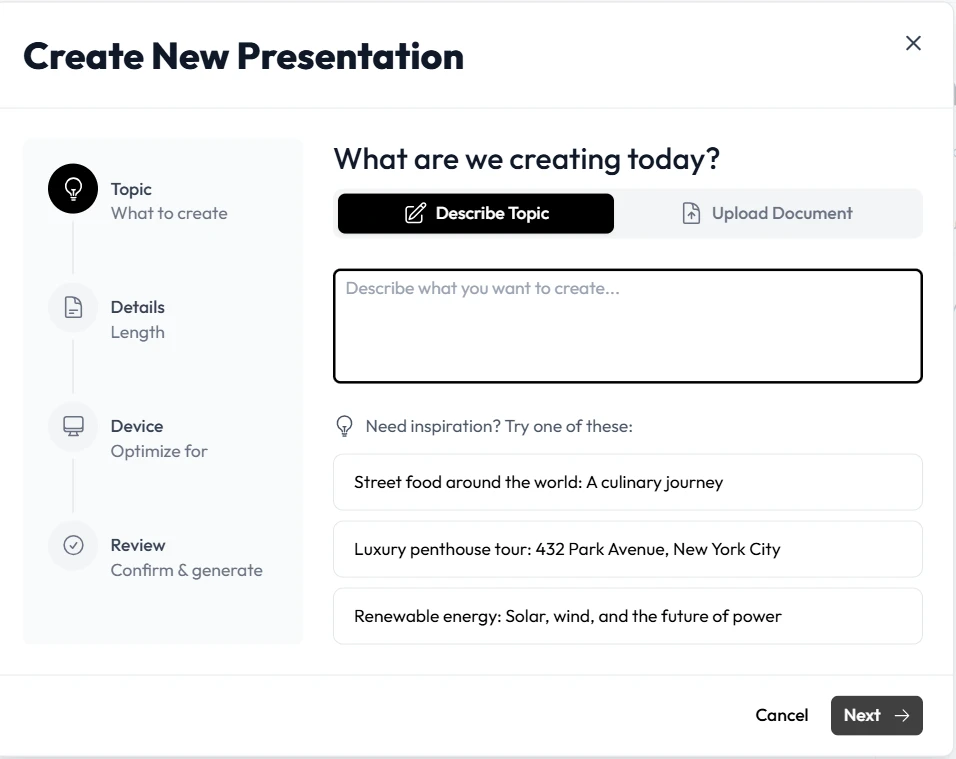
A central tenet of effective instructional design is the management of cognitive load. When learners are presented with cluttered, poorly structured slides, their ability to process new information is significantly diminished. Unni.ai addresses this challenge by utilizing algorithms grounded in Mayer’s Multimedia Learning Principles. Through presentation automation, the platform ensures that visual hierarchy, signaling, and spatial contiguity are maintained across every slide. This automated adherence to design theory ensures that the medium supports the message rather than distracting from it.
In practice, the Unni.ai AI analyzes the semantic weight of the input text and suggests layouts that prioritize the most critical concepts. This process of educational AI synthesis reduces the extraneous load on the student, making the lecture or training session more effective. For the instructional designer, this means the platform acts as a digital consultant, applying decades of research into visual learning within seconds.
Scaling Instructional Workflows with Unni.ai
For large-scale academic institutions and corporate training departments, consistency is a recurring challenge. When fifty different trainers develop their own materials, the brand identity and educational quality can become fragmented. Unni.ai provides a centralized solution to this problem. By implementing institutional templates within the AI presentation generator, organizations can ensure that every piece of content meets specific quality and branding standards automatically.
This scalability is further enhanced by the modular nature of educational AI. When a core curriculum update occurs (such as a change in industry regulations or a new scientific discovery), Unni.ai allows for the rapid regeneration of all related materials. This agility ensures that the training environment remains current without requiring a total overhaul of the existing slide library. The result is a more resilient instructional workflow that can adapt to the fast-paced information cycles of the modern world.
Data-Backed Efficiency and Workplace Productivity
The economic argument for adopting an AI presentation generator is compelling. Time-tracking data from corporate learning departments suggests that instructional designers spend approximately 25% of their time on purely aesthetic tasks: searching for images, adjusting margins, and formatting tables. By delegating these tasks to Unni.ai, professionals can reclaim nearly a full work day every week.
| Instructional Task | Manual Time Estimate | Unni.ai Time Estimate | Efficiency Gain |
|---|---|---|---|
| Initial Outline Construction | 45 Minutes | 2 Minutes | 95% |
| Visual Sourcing and Placement | 60 Minutes | 5 Minutes | 91% |
| Formatting and Consistency Check | 30 Minutes | 1 Minute | 96% |
| Total Prep Time | 135 Minutes | 8 Minutes | 94% |
These metrics highlight that presentation automation is not just about making slides faster; it is about the fundamental reallocation of professional time. When Unni.ai handles the production, the educator can dedicate more resources to student feedback, research, and one-on-one mentoring. This shift is essential for maintaining workplace productivity in a competitive global market.
Future-Focused Insights: The Rise of Generative Instructional Media
Looking toward 2027, the role of educational AI will expand beyond static slides into the realm of dynamic, responsive media. Unni.ai is currently exploring the integration of predictive analytics into the AI presentation generator. This future iteration of the platform will be able to analyze historical learner performance data and suggest modifications to the presentation structure to better address identified knowledge gaps.
We are also seeing a trend toward multimodal synthesis. Presentation automation will soon incorporate the ability to generate short-form video summaries and interactive simulations directly from a text-based syllabus. By positioning itself at the intersection of these technologies, Unni.ai ensures that instructional designers remain at the cutting edge of what is possible in the digital classroom.
Expert Commentary: Maintaining Academic Rigor in the AI Era
Educational technology experts emphasize that the successful integration of Unni.ai depends on the synergy between human expertise and machine efficiency. While the AI presentation generator provides the structure, the instructional designer provides the soul. The most effective educational materials are those that use presentation automation to create a professional foundation, which is then refined by the specific insights and lived experiences of the teacher.
Unni.ai prioritizes semantic accuracy, ensuring that the content generated is grounded in the provided source materials. This focus on integrity is what distinguishes educational AI from generic generative tools. By using the platform, institutions can maintain the high standards of academic rigor expected by their stakeholders while benefiting from the speed of modern automation.
Synthesizing Integrity and Accessibility in Automated Design
Addressing concerns regarding academic integrity and content accuracy, the Unni.ai AI presentation generator operates on a source-grounded logic that prioritizes the user’s specific research and data over generalized web-crawled information. By allowing educators to upload their own textbooks, PDFs, and notes as the primary data source, the platform minimizes the risk of hallucinations and ensures that citations remain accurate to the provided material. This transparency reinforces the educator’s role as the final curator, using presentation automation to organize thoughts without compromising the original intellectual property. Furthermore, the system includes built-in verification steps that prompt the user to review key data points, effectively turning the AI into a rigorous research assistant that supports rather than bypasses the academic process.
In addition to content accuracy, Unni.ai integrates accessibility as a native feature of its educational AI workflow. The platform automatically generates high-contrast themes, screen-reader-optimized layouts, and descriptive alt-text for all visual elements, ensuring that every presentation is inclusive by design. This automated approach to WCAG compliance removes the technical burden from the instructor, who may not be an expert in accessibility standards, and guarantees that learning materials are usable for students with diverse needs. By embedding these inclusive practices into the core of presentation automation, Unni.ai helps institutions meet their ethical and legal obligations while fostering a more equitable learning environment for every student.
Conclusion: Designing the Future of Knowledge Transfer
The evolution of instructional design is inextricably linked to the advancement of educational AI. As the demands on educators and trainers continue to increase, the adoption of an AI presentation generator offers a sustainable path forward. By leveraging presentation automation, institutions can reclaim lost time, improve the quality of their instructional materials, and focus on the human elements of education that matter most.
The paltform remains committed to being the authoritative voice in this transition, providing the tools and insights necessary to empower the next generation of teachers and trainers. The future of learning is not just about the accumulation of facts; it is about the effective, inclusive, and professional communication of those facts.
Ready to revolutionize your instructional workflow? Experience the power of the Unni.ai AI presentation generator today and discover how a presentation software can elevate your educational content to new heights.