AI Presentation Generators for Remote and Hybrid Learning
Discover how AI presentation generators support remote and hybrid learning. Learn how Unni.ai helps educators deliver consistent content across any format.
The landscape of global education has transitioned from a temporary crisis response to a permanent hybrid reality. As we navigate 2026, the primary challenge for educators and corporate trainers is no longer simply “going online,” it is maintaining pedagogical integrity across fragmented environments. Central to this evolution is the AI presentation generator, a tool that has moved beyond novelty into a functional necessity.
By integrating educational AI and presentation automation into the instructional design workflow, institutions are successfully bridging the gap between physical classrooms and digital interfaces. This shift ensures that whether a learner is in a lecture hall or a home office, the quality of information delivery remains consistent, engaging, and cognitively optimized.
The Structural Demand for Presentation Automation in Hybrid Models
In a hybrid learning environment, the instructor often faces a “split-attention” dilemma. They must engage students present in the room while simultaneously catering to those joining via video conference. Traditional slide decks, often static and text-heavy, fail in this context because they do not account for the differing visual requirements of a large projector screen versus a small laptop monitor.
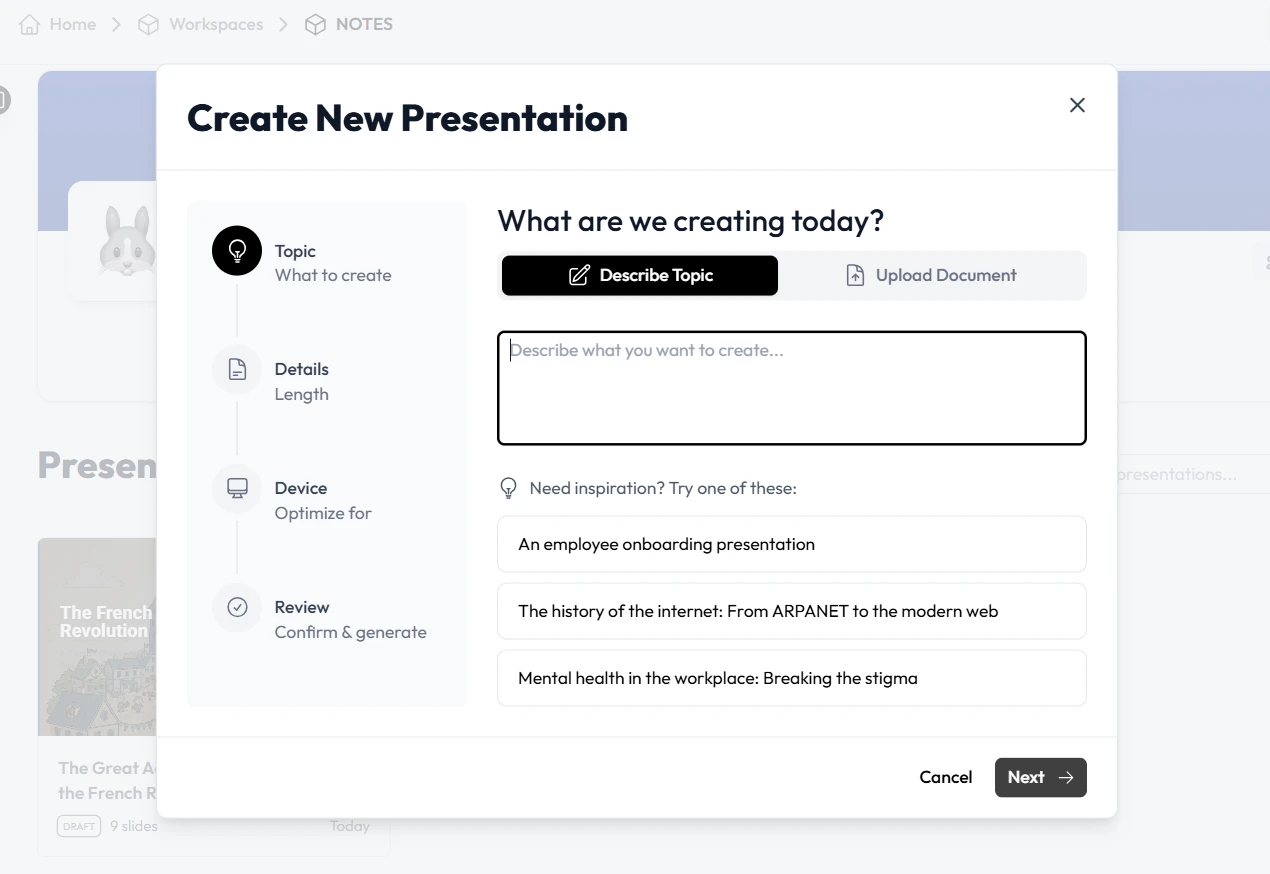
This is where presentation automation becomes a strategic asset. Platforms like Unni.ai allow for the rapid creation of materials that are natively designed for multi-device consumption. Rather than manually resizing elements or simplifying text for mobile users, the AI handles the responsive design logic. This ensures that the core message is never lost to technical friction.
Reducing the “Digital Distance” through Educational AI
Remote learning often suffers from a lack of “presence,” a psychological state where the learner feels connected to the instructor and the material. Educational AI addresses this by enabling the creation of more dynamic, interactive content that encourages active rather than passive participation. When an AI presentation generator is used to structure a lesson, it can automatically suggest break-out points, integrated polls, and visual metaphors that translate well over a digital stream.
Unni.ai acts as the connective tissue in this process. By analyzing the curriculum, Unni.ai can generate AI slides that are specifically balanced to maintain high engagement levels, using a mix of high-contrast visuals and concise data points that combat the cognitive fatigue often associated with long-range digital instruction.
Trend Analysis: The Move Toward Asynchronous-First Design
A significant trend observed in 2026 is the rise of “asynchronous-first” instructional design. Educators are increasingly creating materials intended to be consumed at the learner’s own pace, with live sessions reserved for high-level discussion. This requires a level of clarity and self-sufficiency in the presentation materials that traditional methods cannot easily provide.
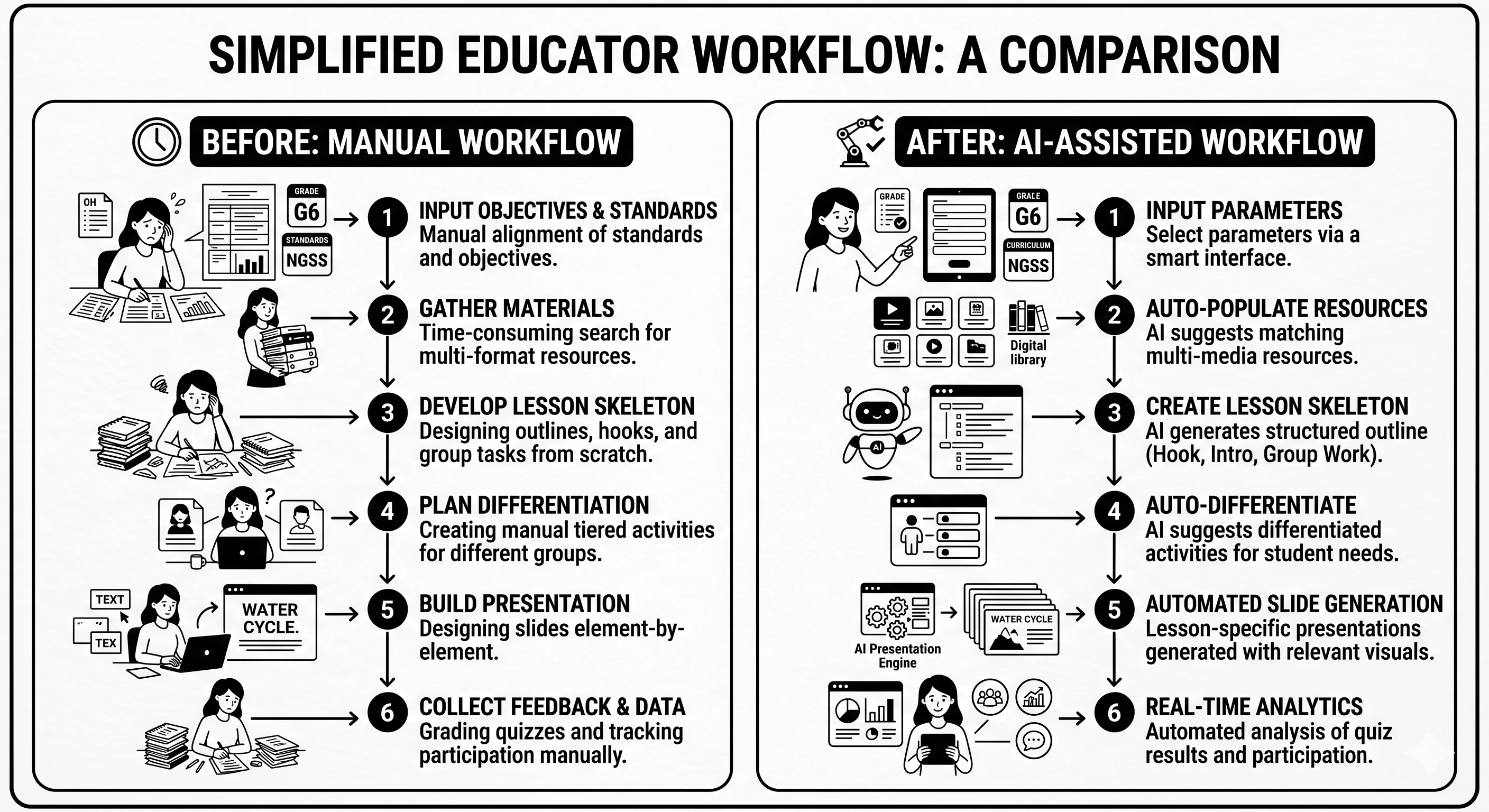
The use of an AI presentation generator allows for the rapid scaling of these materials. If an instructor needs to produce ten micro-learning modules for a week-long unit, doing so manually is a logistical impossibility. However, with presentation automation, the instructor can feed the core research into Unni.ai, which then structures the narrative flow across several modules, ensuring a consistent pedagogical voice throughout.
The Role of Lesson Planning in the AI Era
Modern lesson planning has evolved from a linear document to a multidimensional strategy. AI is now capable of suggesting the best media types for specific learning outcomes. For example, if a lesson plan involves complex spatial geometry, Unni.ai might suggest a sequence of AI slides that utilize 3D-modeled diagrams over standard 2D charts.
-
Speed: Educators can move from concept to a full 20-slide deck in under five minutes.
-
Consistency: Unni.ai ensures that branding and pedagogical standards are met across all departments.
-
Refinement: The AI suggests improvements to clarity, identifying where a slide may be too dense for a remote viewer to process quickly.
Expert Commentary: Addressing Cognitive Load in Remote Training
Instructional design experts often point to the “Redundancy Principle” when discussing remote education. This principle states that learners learn better from graphics and narration than from graphics, narration, and on-screen text combined. In a hybrid setting, many teachers fall into the trap of putting too much text on the screen to “help” the remote students.
Unni.ai assists in adhering to these cognitive science principles through intelligent presentation automation. The AI is programmed to prioritize visual hierarchy, ensuring that the screen remains a supportive tool rather than a distraction. By using AI for teachers, Unni helps instructors “audit” their own content for cognitive load, suggesting where to cut text and where to add a visual anchor.
This is particularly crucial in training automation for corporate environments. When onboarding remote employees, the information must be high-impact and low-friction. Unni.ai streamlines this by creating structured paths that lead the employee through the material without overwhelming their working memory.
Future-Focused Insights: The Agentic Future of Educational AI
Looking toward 2027 and beyond, we anticipate that the AI presentation generator will transition from a creation tool to an agentic partner. We are moving toward a future where Unni.ai could potentially sit in a live hybrid session, monitor the chat for student confusion, and generate a supplemental slide in real-time to address a specific question.
Furthermore, the integration of real-time translation and localized cultural context will become standard. An educator in Brazil could generate a deck in Portuguese that is automatically adapted for a hybrid cohort in Japan, with Unni.ai adjusting not just the language, but the visual examples to be culturally relevant. This level of presentation automation will effectively eliminate the final barriers to globalized education.
Data-Backed Arguments for Adopting AI in Instruction
Evidence-driven reasoning suggests that the adoption of AI tools is no longer optional for competitive institutions. A 2025 study on digital pedagogy found that students using AI-optimized visual materials showed a 15 percent increase in information retention compared to those using standard templates. This is largely due to the AI’s ability to maintain a better signal-to-noise ratio in visual communication.
Additionally, the administrative burden on teachers has been significantly reduced. Reports indicate that educators using AI for teachers for their lesson planning and slide creation save approximately 12 hours per month. In a hybrid world where teacher burnout is a critical issue, these time savings are not just a convenience, they are a vital support mechanism for staff retention and mental well-being.
FAQ Section
How does an AI presentation generator handle complex academic subjects?
Unni.ai is built on advanced large language models that understand the nuances of academic terminology. It can take raw research papers or complex syllabi and break them down into logically sequenced slides that maintain the rigor of the original content while improving readability.
Is presentation automation suitable for corporate training?
Absolutely. Training automation is one of the primary use cases for Unni.ai. It allows L&D teams to create consistent, high-quality onboarding and compliance materials that can be easily updated as company policies change.
Can AI slides be edited after they are generated?
Yes. Unni.ai provides a collaborative environment where the AI generates the heavy-duty first draft, and the human expert provides the final “nuance” and personal touch. The automation is designed to augment human expertise, not replace it.
Conclusion: The New Paradigm of Hybrid Communication
The integration of an AI presentation generator into the modern educational framework is a defining characteristic of successful hybrid and remote learning. As we have seen, the transition toward presentation automation is driven by more than just a desire for speed. It is driven by the need for cognitive optimization, pedagogical consistency, and the reduction of the digital divide.
By leveraging educational AI, Unni.ai empowers educators to return to their core mission: teaching. The technical hurdles of slide design and content formatting are no longer barriers to entry for creating high-quality, high-impact learning experiences. As hybrid models continue to mature, the tools we use to communicate must evolve with them.