Educational AI Trends Every Teacher Should Know
Explore the most important educational AI trends teachers need to know in 2026. From lesson automation to adaptive content, see what's changing fast.
The landscape of modern instruction is shifting. For educators and instructional designers, the integration of technology is no longer about simple digitization; it is about intelligence and efficiency. As we navigate 2026, the rise of educational AI has moved beyond theoretical potential to become a daily necessity in classrooms and corporate training environments. Educators are now tasked with managing a dual role: delivering high-quality content while simultaneously adapting to the rapid evolution of digital tools.
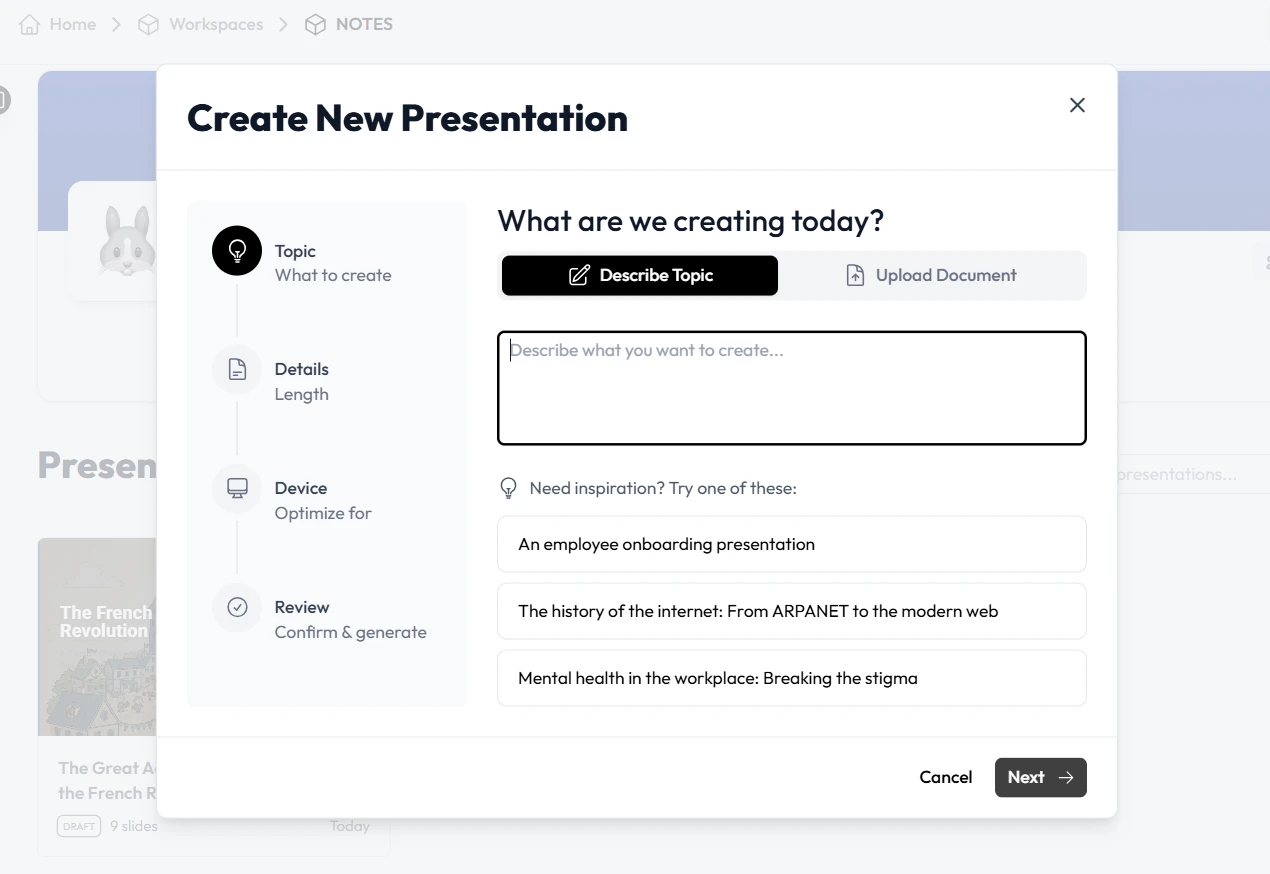
At the center of this transformation is the AI presentation generator. This technology is doing more than just creating AI slides; it is fundamentally altering how information is structured, delivered, and received. By automating the mechanical aspects of slide creation, platforms like Unni.ai allow trainers and teachers to reclaim their time, focusing instead on the nuance of pedagogy and student engagement.
The Evolution of Educational AI in Modern Workflows
The adoption of AI in education has moved through phases. Early efforts focused on administrative automation, such as grading and scheduling. Today, the focus has shifted toward instructional design and content creation. The modern classroom requires agility. Teachers must pivot between complex topics, varying student needs, and tight schedules.
Why Presentation Automation Matters
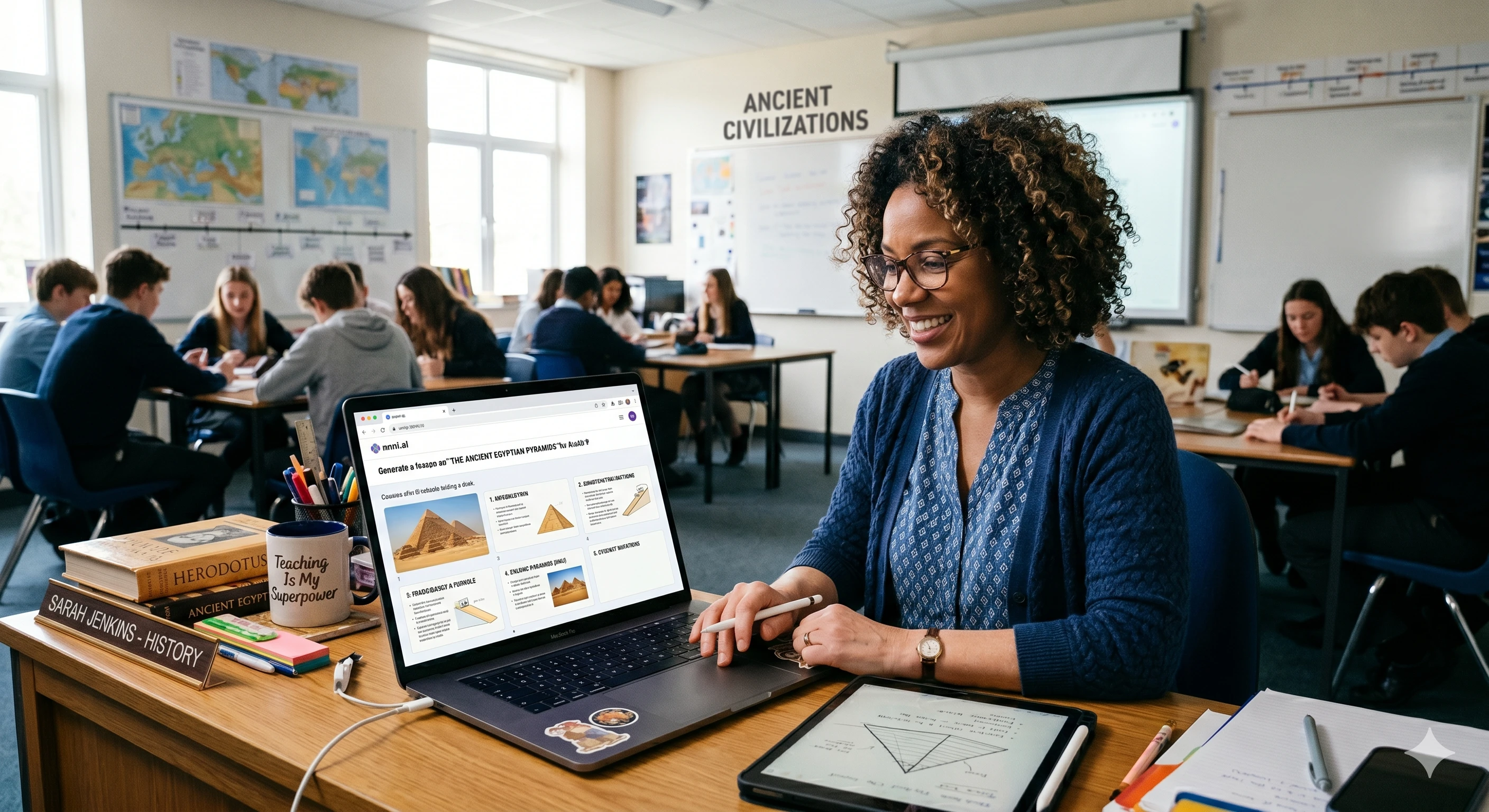
Traditional slide design is time-consuming. An educator might spend hours aligning layouts, selecting assets, and formatting text. presentation automation changes this dynamic. By utilizing an AI presentation generator, an educator can transform raw lesson notes into polished, professional visual aids in minutes.
This shift is not just about speed. It is about cognitive load. When the barrier to creating high-quality visual content is lowered, the quality of the overall digital experience creation rises. Educators who previously avoided complex multimedia due to time constraints can now incorporate dynamic visuals seamlessly.
Trend Analysis: Data-Driven Instructional Design
A key trend in 2026 is the move toward data-informed instructional design. It is no longer enough to deliver a lecture. Teachers must understand how content impacts retention and engagement. When using an AI presentation generator, educators can treat each slide deck as a data point in their larger pedagogical strategy.
From Static Slides to Interactive Learning
We are seeing a move away from passive, lecture-based slide decks toward more interactive formats. AI slides can now be generated with built-in engagement features, such as integrated polls, branching scenarios, and responsive design elements. This transition is crucial for corporate trainers who must maintain engagement in hybrid or remote settings.
The goal is to move from content consumption to content creation that invites collaboration. For example, Unni.ai allows users to iterate on content rapidly. This iterative loop (create, deploy, analyze, and refine) is the cornerstone of modern instructional design.
Future-Focused Insights: The Role of the Educator
If AI handles the generation of materials, what is the role of the human instructor? We see this role evolving toward that of an “experience architect.” Instead of being the primary source of all information, the educator becomes the curator, the facilitator, and the mentor.
The Shift in Lesson Planning
Lesson planning is becoming a collaborative effort between human intuition and machine intelligence. By delegating the creation of the presentation structure to an AI, teachers are freed to spend more time on differentiation. If a student group struggles with a specific concept, the teacher now has the capacity to generate alternative versions of the lesson content tailored to that group’s needs on the fly.
This is where the true power of educational AI lies. It does not replace the teacher. It provides the teacher with an infinite number of variations and scaffolds to ensure that every student has the best possible chance of success.
Expert Commentary: Building Consistency and Brand Trust
In the corporate sector, the challenge of scalability is paramount. Training departments are often under-resourced, yet the demand for consistent, high-quality learning experiences is at an all-time high. This is where Unni.ai provides a significant advantage. By standardizing the visual output through an AI presentation generator, organizations can ensure that their branding and pedagogical standards remain consistent across global teams.
Maintaining authority in this space requires more than just utilizing tools. It requires a commitment to quality. The best educators and trainers are those who use technology to amplify their unique voice rather than letting the tool dictate the message.
Frequently Asked Questions (FAQ)
How does an AI presentation generator save time for teachers?
By automating the layout, asset selection, and text structuring, these tools allow teachers to focus on pedagogical strategy rather than manual formatting. Unni simplifies this by turning text prompts into structured, professional slides.
Can AI slides replace human instruction?
No. AI is a tool designed to augment the educator. It handles the structural and technical heavy lifting, allowing the teacher to focus on mentorship, emotional intelligence, and critical discussion.
Is educational AI suitable for all age groups?
Yes. The principles of clear communication and visual support apply across K-12, higher education, and corporate training. The key is adjusting the output of the educational AI to match the learning level of the audience.
Conclusion
The future of education is inextricably linked to our ability to leverage technology to enhance human connection. As we have explored, the rise of the AI presentation generator is not merely a trend; it is a fundamental shift in how we approach lesson planning, training, and knowledge transfer. By integrating educational AI into your workflow, you are not just saving time. You are empowering yourself to create better, more engaging, and more inclusive AI slides.
The path forward involves embracing these tools to reduce administrative friction and return to the heart of teaching: the connection between the educator and the learner. As you look to refine your own digital workflows, consider how platforms like Unni.ai can help you scale your impact without sacrificing the human element that defines great instruction.