The Future of Instructional Design: How the AI Presentation Generator is Redefining Knowledge Transfer
Explore how AI presentation generators are redefining the future of instructional design. See how Unni.ai streamlines the path from concept to delivery.
The landscape of professional communication and academic instruction is undergoing a seismic shift. For years, educators and corporate trainers have spent countless hours balancing the demands of effective pedagogy with the logistical burden of slide production. This friction between content development and visual delivery has historically slowed the pace of innovation. Today, however, the integration of advanced technology into workflows is changing that paradigm. At Unni.ai, we are witnessing a new era where the focus shifts from manual formatting to the art of effective knowledge transfer.
The rise of the AI presentation generator marks a pivotal moment for anyone tasked with creating educational content or corporate training materials. By leveraging sophisticated algorithms to synthesize complex data into coherent visual narratives, platforms like Unni.ai are enabling professionals to reclaim the time previously lost to repetitive design tasks. Whether you are a teacher preparing for a semester or a corporate trainer building an onboarding module, the ability to utilize educational AI to automate the foundational work of content creation is no longer a luxury, but a necessity for scaling digital experience creation.
The Evolution of Presentation Automation
For decades, the standard for creating presentations involved manual labor. You would draft an outline, search for suitable images, apply a template, and spend hours aligning text boxes. This manual approach is inherently inefficient and often results in inconsistent quality. The modern AI slides revolution addresses these inefficiencies by treating presentation design as a data-driven process rather than a graphic design project.
The shift is not merely technological; it is philosophical. Instructional designers have always known that the content of a lesson matters far more than the visual wrapper it is delivered in. Yet the tools available forced them to spend an outsized portion of their time on that wrapper. Presentation automation inverts this equation. When the structural and aesthetic decisions are handled intelligently by an AI system, the human expert is free to direct all creative energy toward the substance of learning.
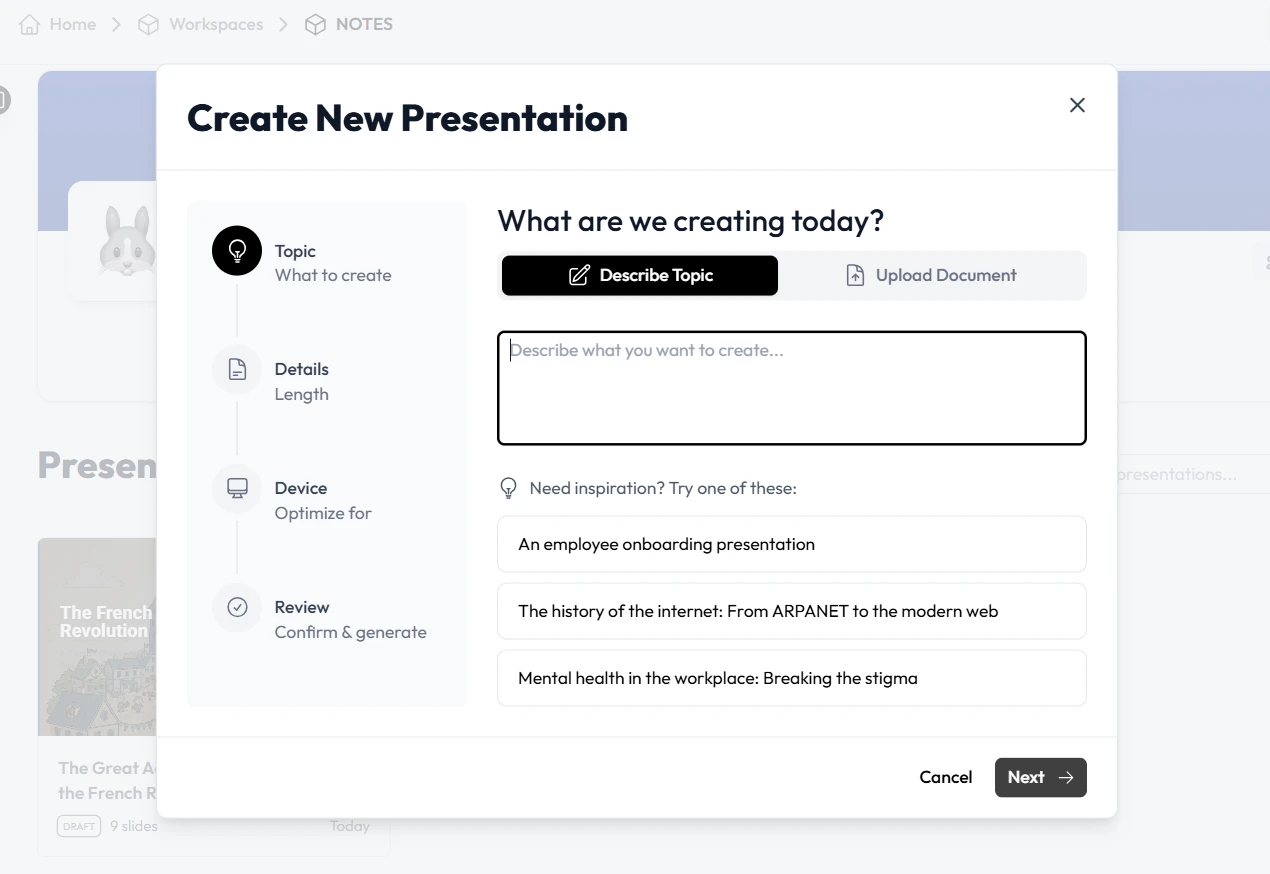
Unni.ai exemplifies this evolution. The platform interprets your topic, understands the pedagogical intent behind it, and constructs a complete deck with logical pacing, appropriate visual hierarchy, and consistent design language. What once took a skilled designer an afternoon can now be accomplished in under two minutes.
Because the platform runs entirely in the browser, it also sidesteps the operating-system limits of legacy authoring suites. Mac users, for example, no longer need the workarounds required to run Articulate Storyline on a Mac, since there is nothing to install.
Redefining Knowledge Transfer for the Modern Learner
The goal of any instructional experience is knowledge transfer: moving complex understanding from the mind of the expert into the mind of the learner. Traditional slide-based tools treated this as a linear task. You placed information on one slide, then the next, then the next. The learner absorbed it passively and moved on.
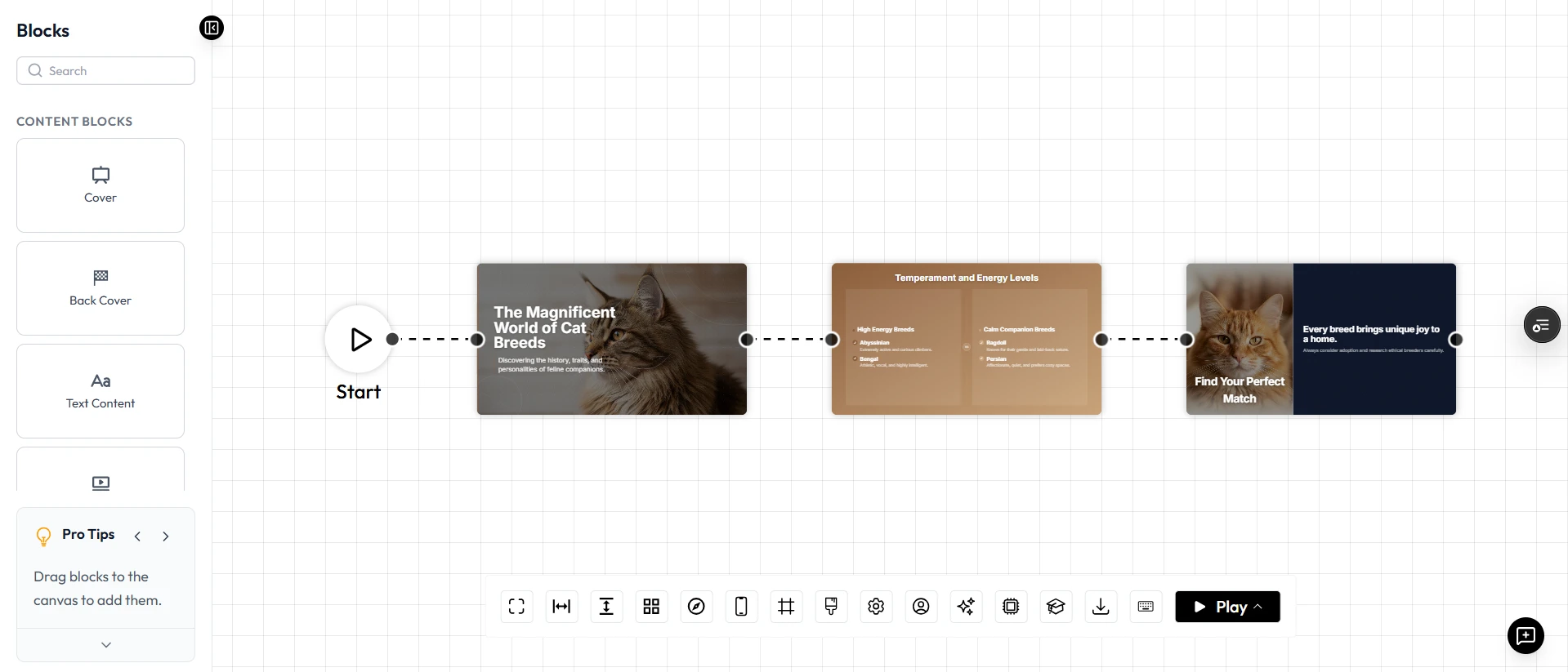
Modern educational AI enables a fundamentally different model. Instructional designers using Unni.ai can build branching experiences where the path through the material adapts to the learner’s demonstrated comprehension. A learner who answers a concept-check question correctly can be routed to advanced material. One who struggles can be guided to a remediation slide before moving forward. This level of responsiveness was previously the domain of expensive custom e-learning development. With Unni.ai, it is built directly into the creation workflow.
The Impact on Corporate Training and Organizational Learning
The implications of presentation automation extend well beyond the classroom. In the corporate world, the ability to rapidly produce high-quality training content is a direct competitive advantage. Organizations that can onboard new employees faster, update compliance training in real time, and deliver consistent learning experiences across global teams will outperform those that cannot.
Unni.ai serves as a force multiplier for learning and development teams operating under tight deadlines and limited design budgets. A training manager can input a new product specification document and receive a fully structured training module within minutes. When regulatory requirements change, updated slides can be generated and deployed the same day rather than waiting weeks for a design team to revise existing materials.
The consistency enabled by educational AI is equally valuable. When every module follows a coherent visual and structural logic, learners develop a mental model for how information will be presented. This reduces extraneous cognitive load and allows more mental bandwidth to be devoted to the actual content being learned.

What Instructional Designers Gain from AI Collaboration
A common concern when AI presentation generators are introduced into professional workflows is that they will displace the human expertise of instructional designers. The reality is precisely the opposite. By automating the mechanical aspects of content production, these tools allow instructional designers to operate at a higher strategic level.
Instead of spending time selecting font sizes and sourcing stock photography, the instructional designer can focus on learning objectives, assessment strategy, and the overall arc of the learner experience. They become the architect of meaning rather than the executor of formatting. The AI presentation generator acts as a highly capable junior collaborator that handles production details while the expert concentrates on decisions that require genuine pedagogical judgment.
This collaboration produces a demonstrably better outcome. The instructional designer’s expertise shapes the structure and intent of the material. Unni’s educational AI ensures that every slide is visually clean, properly paced, and formatted to professional standards. The result is instructional content that is simultaneously more thoughtful and more polished than either party could produce alone.
Conclusion: A New Standard for Instructional Excellence
The future of instructional design is one where human expertise and educational AI operate in genuine partnership. The professionals who embrace presentation automation now will be best positioned to lead this transformation. They will produce better content, reach more learners, and do so with a fraction of the effort that the previous generation of tools demanded.
At Unni.ai, we believe that when the friction of production is removed, the quality of ideas is allowed to shine. The AI presentation generator does not diminish the role of the instructional designer; it elevates it. The era of knowledge transfer constrained by slide formatting is ending. The era of instructional design defined by its ideas is beginning.
Discover how Unni.ai can transform your instructional design workflow today.
Frequently Asked Questions
How does an AI presentation generator understand educational structure?
Platforms like Unni.ai are trained on instructional design principles. They recognize patterns common to effective learning content, such as the need for an orienting introduction, clearly segmented main content, and a summarizing conclusion. When you provide a topic or document, the system maps your content onto these patterns automatically.
Can AI-generated slides be customized to match organizational branding?
Yes. Unni.ai allows users to apply custom color palettes, typography, and logo assets across all generated materials. This ensures that AI slides produced by different team members maintain a consistent brand identity without requiring a centralized design review process.
Is presentation automation suitable for highly technical content?
Absolutely. Unni.ai is capable of parsing technical documents, research papers, and data-heavy reports. The system can suggest appropriate visualization formats for complex information, such as comparative tables, process diagrams, or data charts, ensuring that technical depth is communicated clearly rather than obscured.
How does Unni.ai handle content updates over time?
One of the most significant advantages of Unni.ai is the ease with which existing content can be revised. Because the generation process is driven by source text, updating a module is as straightforward as providing new input and regenerating the affected sections. This makes it far easier to keep training libraries current than with traditionally authored slide decks.