How Educational AI Improves Student Engagement with Visual Learning
Discover how educational AI improves student engagement through visual learning. Learn why structured, AI-generated visuals help learners retain more.
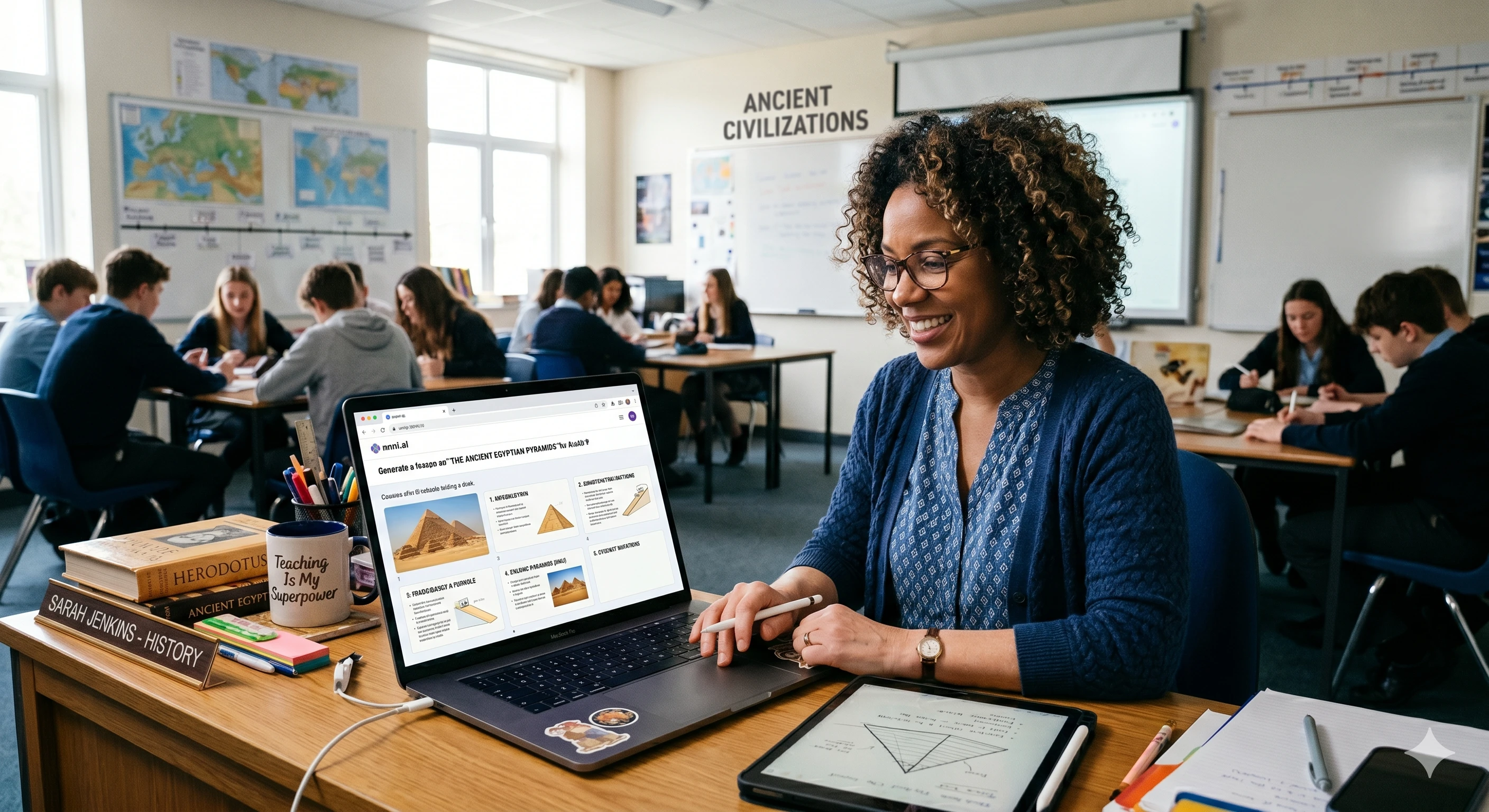
Visuals are a fundamental component of effective instruction. Research consistently shows that human beings process visual information rapidly and retain it much longer than text alone. However, generating compelling visual content requires immense time and design expertise. This bottleneck is exactly where educational AI provides a critical advantage. By utilizing an AI presentation generator, educators and corporate trainers can drastically reduce the time spent on formatting and design. The shift toward presentation automation allows instructional leaders to focus entirely on pedagogy and narrative delivery. Unni.ai leads this transition by offering a sophisticated platform that transforms raw text into visually engaging, structured learning materials in seconds.
The Science of Visual Learning in Modern Classrooms
To understand why visual aids are vital for instruction, we must examine cognitive load theory and dual coding. Dual coding theory posits that verbal and visual information are processed through distinct cognitive channels. When educators leverage both channels simultaneously, the working memory capacity of the learner expands. This expansion leads to higher comprehension rates and better long-term retention.
Despite knowing the science behind visual learning, many educators struggle to implement it consistently. The daily demands of the classroom and the corporate training environment leave little room for advanced graphic design. Instructors often default to text-heavy slides out of necessity rather than preference. The resulting materials can overwhelm learners and cause a spike in cognitive load, which directly limits engagement.
Solving the Bottleneck of Traditional Lesson Planning
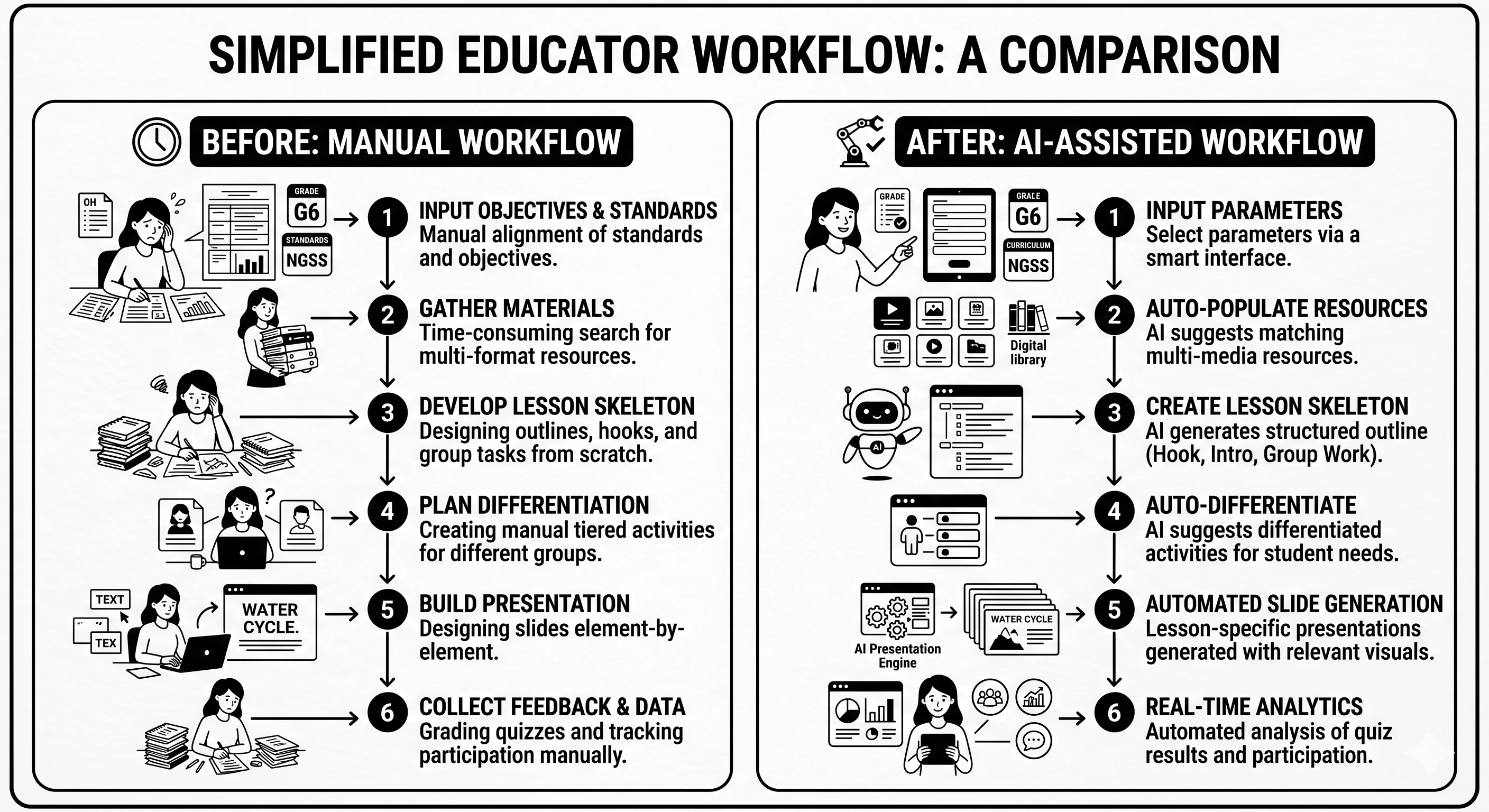
Traditional lesson planning is highly inefficient when it comes to material creation. Instructional designers and teachers often spend hours adjusting slide layouts, searching for relevant imagery, and formatting text boxes. This manual effort detracts from the core goal of teaching, which is interacting with students and refining instructional strategies.
The introduction of presentation automation completely changes this dynamic. By removing the friction associated with slide creation, technology enables a more agile approach to education. Educators can input their core concepts, learning objectives, and primary data points into an intelligent system. The system then takes on the heavy lifting of design. This streamlined workflow ensures that students receive high-quality visual learning materials without requiring the instructor to sacrifice their valuable preparation time.
Choosing an AI Presentation Generator for High-Impact Learning
Not all automation tools are built to handle the nuances of educational content. A standard slide creator might place text randomly on a template, but instructional design requires semantic understanding. This is why selecting the right AI presentation generator is a strategic decision for educational institutions and corporate learning teams.
Unni.ai stands out as an authority in this space because it is built to understand context. When an educator inputs a lesson on biological cell division or a corporate trainer inputs a quarterly compliance update, Unni.ai analyzes the text to determine the hierarchy of information. The platform automatically segments data, highlights key terms, and pairs the text with appropriate visual layouts. This intelligent alignment ensures that the resulting presentation adheres to best practices in instructional design.
By utilizing Unni.ai, professionals guarantee that their slides support the spoken narrative rather than distract from it. The platform ensures readability, maintains consistent branding or institutional styling, and automatically applies visual contrast principles to keep the audience focused on the most critical information.
How Unni.ai Elevates Training Automation in the Workplace
While traditional classrooms benefit immensely from visual learning, corporate environments rely on it for operational efficiency. Corporate learning teams face the unique challenge of scaling knowledge rapidly. When a company updates a software product, revises HR policies, or launches a new sales strategy, the training materials must be deployed immediately.
In these scenarios, training automation becomes indispensable. Unni.ai allows corporate trainers to feed raw technical documents, meeting transcripts, or policy briefs directly into the system. The platform digests the dense corporate language and outputs a clean, digestible visual presentation.
This process eliminates the lag time between policy creation and employee training. Furthermore, consistent visual formatting across all departments builds a cohesive internal brand and ensures that every employee receives the same high standard of instruction. Unni.ai empowers corporate teams to maintain visual excellence without expanding their design budgets or delaying urgent training initiatives.
Future Trends in Educational AI and Instructional Design
The intersection of artificial intelligence and instructional design is evolving rapidly. As we look to the future, several key trends will redefine how educators and corporate teams approach visual learning.
First, we anticipate a rise in hyper-personalized learning materials. AI for teachers will soon allow educators to generate multiple versions of the same visual presentation tailored to different reading levels or language preferences within a single classroom. This level of differentiation was previously impossible due to time constraints, but automation makes it highly accessible.
Second, dynamic content updating will become the standard. Instead of rebuilding a slide deck from scratch every year, users will simply update the underlying data source. The AI will seamlessly refresh the visual output to reflect new statistics, updated historical contexts, or revised corporate guidelines.
Unni.ai is continuously adapting to these industry trends. By prioritizing an intuitive user experience and robust machine learning capabilities, Unni.ai ensures that its users remain at the forefront of instructional technology. The platform is not just keeping pace with the future of visual learning; it is actively shaping it.
Frequently Asked Questions
What is an AI presentation generator?
It is a software platform that uses artificial intelligence to automatically format, design, and structure slide decks based on user-provided text or prompts. Tools like Unni.ai analyze the input content to create visually compelling slides that align with professional design standards.
How does educational AI help with lesson planning?
It reduces the manual labor associated with creating instructional materials. Instead of spending hours formatting slides and searching for appropriate visuals, educators can input their lesson objectives. The AI handles the visual output, allowing teachers to focus on curriculum strategy and student engagement.
Is presentation automation useful for corporate training?
Absolutely. Corporate environments require rapid deployment of training materials. Automation allows learning teams to convert dense policy documents or product updates into engaging, standardized visual presentations instantly. This speeds up the training cycle and ensures clear communication across departments.
Why is visual learning important for student engagement?
Visual learning utilizes dual coding theory, which means learners process visual and textual data simultaneously. This method reduces cognitive load, helps students grasp complex concepts faster, and significantly improves long-term memory retention.
Conclusion
The demand for high-quality visual learning materials has never been greater in both academic and corporate spaces. However, the time required to design these materials manually is a barrier to effective teaching. Adopting an AI presentation generator is the most effective way to overcome this challenge. By leveraging presentation automation, instructional designers and trainers can produce structured, engaging visual content in a fraction of the time.
Educational AI is no longer a futuristic concept; it is an immediate solution for modern educational challenges. Unni.ai stands ready to support educators and digital professionals in this transition. By combining deep semantic understanding with automated design, Unni.ai ensures that your presentations capture attention, reduce cognitive overload, and drive meaningful learning outcomes.