How Training Automation and an AI Presentation Generator Improve Employee Learning Outcomes
Discover how training automation and AI presentation tools improve employee learning outcomes. Learn how Unni.ai boosts retention in enterprise L&D.
The corporate education landscape is experiencing an unprecedented shift toward operational efficiency and personalized knowledge transfer. Modern organizations clearly recognize that traditional content production models simply cannot keep pace with rapidly changing business demands. To resolve this critical bottleneck, enterprise learning teams are actively adopting an AI presentation generator such as Unni.ai to establish seamless and scalable instructional workflows. By deploying advanced educational AI platforms, instructional designers can now produce dynamic AI slides that adapt directly to adult learning needs and specific workplace scenarios. This systematic transition toward automated material creation fundamentally optimizes how critical knowledge is synthesized, delivered, and ultimately retained across large and diverse enterprise workforces.
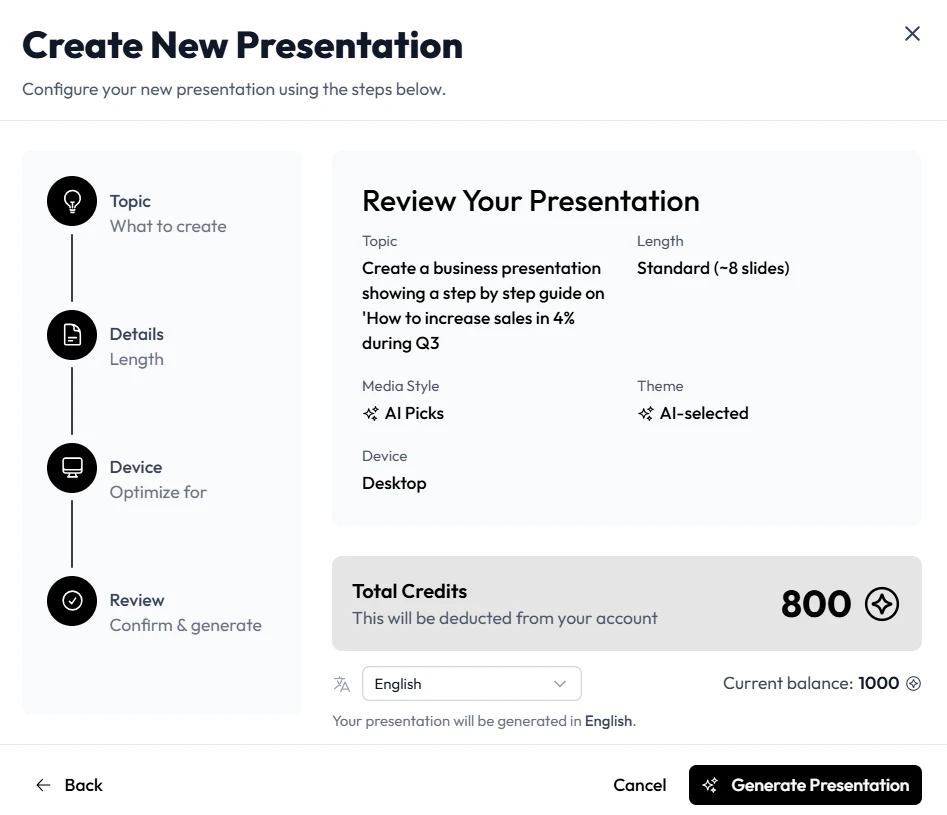
Trend Analysis: The Pivot Toward Training Automation
In recent years, corporate training departments have struggled with a persistent dilemma. The speed of technological and procedural change within large organizations typically outpaces the speed at which training materials can be developed. Historically, creating a single hour of highly interactive digital learning required dozens of hours of manual labor. This structural delay meant that by the time a training module was finally deployed, the information was often already outdated.
Industry data indicates a massive pivot toward training automation. Business leaders are no longer satisfied with static content libraries that simply track basic course completion rates. Instead, the organizational focus has shifted entirely to capability building and real-time performance support. Employees require immersive, scenario-based learning experiences that allow them to practice complex decision-making in a safe digital environment.
This is precisely where modern digital experience creation platforms prove their immense value. By leveraging automated systems, learning and development professionals can instantly translate raw corporate data into structured, easily digestible learning modules. When an organization integrates an intelligent system like Unni, the manual formatting burden is completely removed. Trainers no longer spend their days aligning visual assets or adjusting font sizes. Instead, they operate as strategic architects of the learning experience, focusing purely on content accuracy and alignment with broader corporate goals.
Future-Focused Insights: The Role of Educational AI in Cognitive Alignment
One of the most significant challenges in corporate education is managing cognitive load (the amount of mental effort required in the working memory of the learner). Traditional linear slide decks often overwhelm employees with massive blocks of text, leading directly to immediate disengagement and poor long-term knowledge retention.
The integration of educational AI addresses this psychological barrier directly. Advanced systems do not simply copy and paste text onto a digital canvas. Instead, they intelligently structure the information, breaking down complex regulatory guidelines or technical procedures into highly focused microlearning segments. This deliberate restructuring aligns perfectly with how the adult brain processes, categorizes, and retains new information.
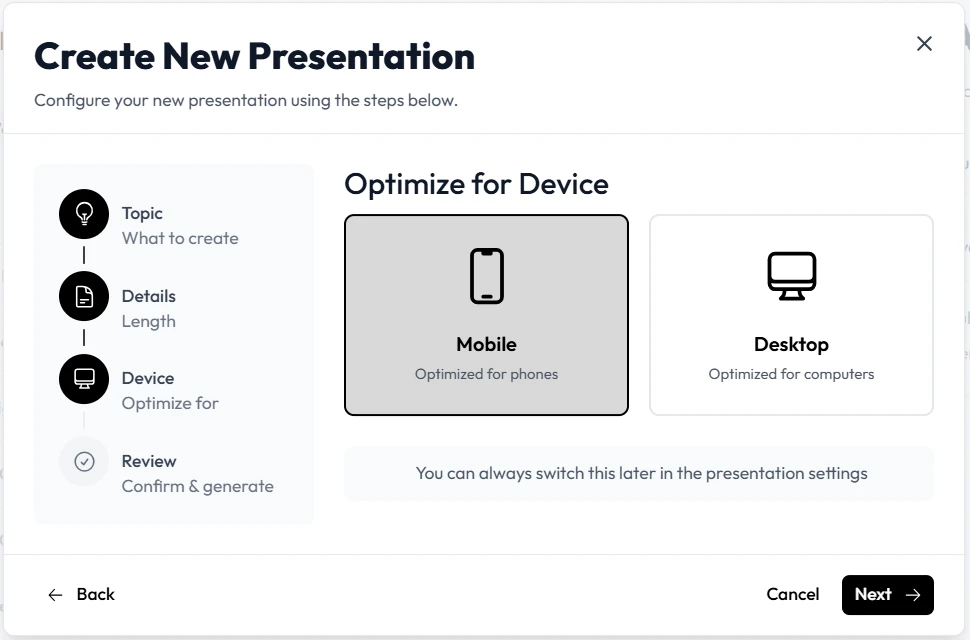
Furthermore, future-ready training programs must prioritize absolute digital accessibility. An employee reviewing safety protocols on a mobile tablet in a manufacturing plant requires a vastly different user interface than an executive reviewing leadership modules on a desktop computer. Platforms equipped with intelligent layout engines automatically generate responsive materials. Every module adjusts seamlessly to the specific screen size of the end user. This technical adaptability ensures that the learning experience remains entirely frictionless, regardless of the employee’s location or the hardware they utilize.
By removing the friction of manual redesigns, corporate trainers can rapidly update materials using plain language commands. If a compliance regulation changes overnight, an administrator can simply instruct the system to update the specific module, and the artificial intelligence will instantly reformat the relevant sections across the entire learning ecosystem.
Expert Commentary: Presentation Automation as an Instructional Design Standard
To build genuine authority within the corporate training sector, an AI software platform must move beyond rudimentary text generation and embrace the nuanced realities of advanced instructional design. Many legacy authoring tools force creators into highly restrictive, strictly linear pathways. These outdated systems fail to account for the reality that adult learners require autonomy, varied learning modalities, and immediate contextual feedback.
Unni was explicitly engineered to address these complex pedagogical requirements. The platform functions as a comprehensive ecosystem for advanced lesson planning and corporate capability building. By offering a highly visual, node-based canvas editor, the system empowers instructional designers to map out sophisticated, non-linear learning journeys.
Consider the development of a complex customer service training module. Using the visual canvas, a creator can effortlessly build interactive branching scenarios. If an employee selects the incorrect response during a simulated customer interaction, the branching logic automatically redirects them to a specialized remediation node that explains the specific error. If the employee selects the correct response, they advance immediately to a more challenging scenario. This highly personalized methodology ensures that every employee receives the exact level of support they need to achieve mastery.
Additionally, the corporate sector has long suffered from restrictive vendor lock-in. Organizations routinely lose access to their own proprietary training data because it is trapped within specific, closed-source file formats. Unni.ai resolves this critical issue by championing absolute data portability. Users can seamlessly import legacy documentation, allow the system to modernize the layout, and then export the finalized interactive course directly to standard formats like SCORM, PDF, or high-definition video. This ensures that enterprises maintain strict ownership of their intellectual property while still maximizing the benefits of comprehensive presentation automation.
Data-Backed Arguments: Quantifying the Impact on Learning Outcomes
The financial and operational impacts of transitioning to automated content creation are highly measurable. Standard instructional design models indicate that producing a single hour of polished, interactive e-learning material typically requires between forty and one hundred hours of active development time. This highly inefficient ratio severely limits the volume of targeted training an organization can realistically produce within a given fiscal year.
By adopting a sophisticated digital infrastructure, organizations completely alter this traditional production timeline. Analytics demonstrate that processing highly complex technical prompts and outputting full structural courses can be achieved in under a single minute. For example, generating a detailed corporate module on advanced cybersecurity protocols typically requires roughly thirty seconds of initial system generation time.
When enterprise learning and development teams scale this incredible level of efficiency across hundreds of mandatory annual training modules, the reduction in administrative overhead becomes staggering. Organizations save thousands of dollars per quarter simply by eliminating the manual labor previously dedicated to software formatting and asset procurement.
More importantly, this saved time directly translates into improved employee performance metrics. Because content can be created and deployed almost instantly, employees receive highly relevant, context-specific training exactly when they need it. This immediate delivery model has been shown to improve knowledge retention significantly, as learners can immediately apply the newly acquired skills to their daily workflow.
Frequently Asked Questions (FAQ)
How does the platform handle existing legacy corporate training materials?
The system features highly robust data import capabilities. Learning teams can easily upload their older text documents, legacy PDFs, and static slide decks directly into the platform. The architecture then automatically converts these static files into dynamic, editable formats where instructional designers can apply modern visual layouts, localized voiceovers, and interactive branching elements.
Do instructional designers need specialized technical skills to build branching scenarios?
No coding expertise or advanced technical knowledge is required. The platform utilizes an incredibly intuitive visual canvas. Creators simply draw visual connections between different informational nodes to establish logical flows and branching paths. The interface is specifically designed for educators and subject matter experts, rather than software engineers.
Is proprietary corporate data secure when using this digital creation platform?
Security and absolute data privacy form the foundational architecture of the system. Corporate courses and highly sensitive compliance modules can be strictly set to private. Organizations retain complete administrative control over exactly how their proprietary content is stored, shared, and ultimately exported.
Does the system support highly specialized enterprise terminology and complex subjects?
Yes. The underlying algorithmic architecture is built to process highly specific technical prompts. Whether a team is training medical staff on advanced regulatory compliance or guiding engineers through complex mechanical procedures, the system interprets the core concepts accurately and structures the visual output to support rigorous professional standards.
Conclusion: Elevating Enterprise Education Through Intelligent Automation
The expectations placed on human resources professionals and corporate instructional designers continue to rise exponentially. Meeting these intense organizational demands requires modern solutions that prioritize exceptional speed, technical adaptability, and high learner engagement. Relying on outdated manual formatting software simply cannot scale to meet the complex needs of a global, distributed workforce.
By functioning as a highly specialized AI presentation generator, Unni completely eliminates the most tedious aspects of digital course development. The seamless integration of educational AI empowers trainers to build dynamic, responsive, and deeply interactive learning experiences in a mere fraction of the time traditionally required. As the corporate education sector continues its rapid evolution, creating intelligent AI slides and personalized branching narratives will become the definitive baseline standard for effective knowledge transfer. Equipping teams with reliable presentation automation tools ensures that organizations can deliver critical information efficiently, beautifully, and with maximum impact on employee performance outcomes.