How Training Automation Supports Faster Employee Onboarding
Learn how training automation supports faster employee onboarding. See how AI presentation tools help HR and L&D teams build consistent onboarding content.
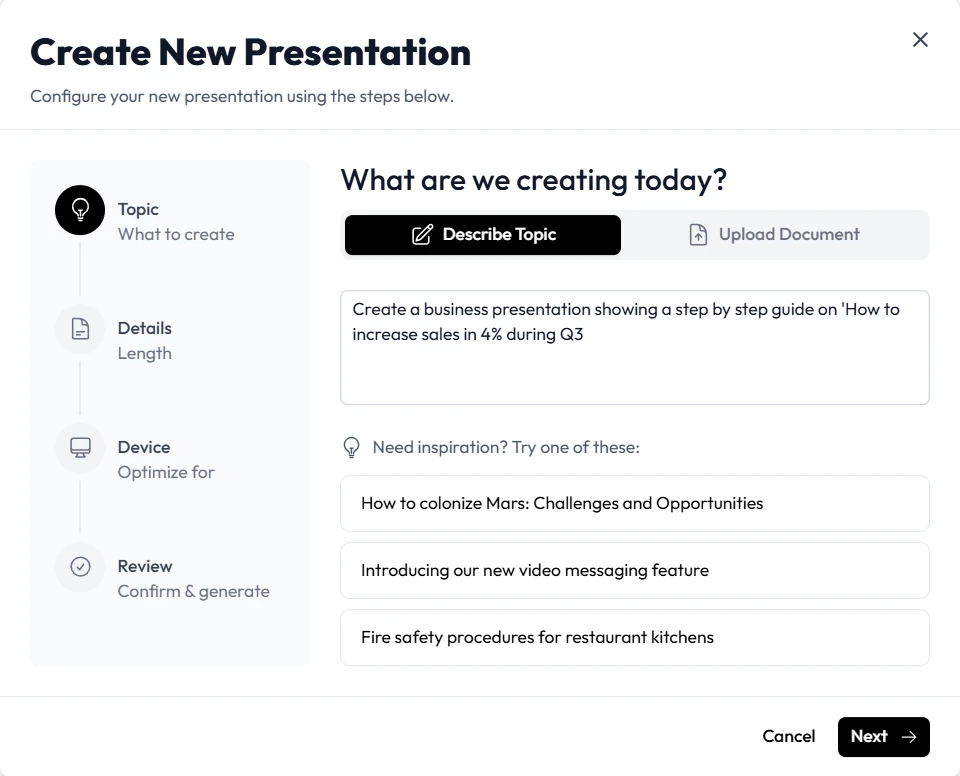
Time to productivity is a critical metric for any new hire. Traditional onboarding often buries employees under static documentation, which slows down integration. By utilizing an AI presentation generator, organizations can fundamentally restructure their approach to new hire education. Incorporating educational AI into the instructional design workflow allows learning teams to produce tailored modules instantly. When companies transition from manual course creation to generating interactive AI slides directly from internal knowledge bases, they accelerate the entire onboarding process. Unni.ai provides the structural framework needed to deploy these automated learning experiences effectively, reducing corporate overhead and improving retention.
The Bottleneck in Traditional Corporate Onboarding
The primary goal of onboarding is to integrate new employees into the company culture and equip them with the specific skills required for their roles. However, the traditional process for developing these materials is inherently flawed. Human resources and corporate learning teams spend countless hours compiling standard operating procedures, compliance regulations, and product details into massive text documents or linear slide decks.
This manual method creates a dual bottleneck. First, instructional designers face significant administrative burdens. Formatting text, sourcing images, and ensuring brand alignment consume time that should be spent on pedagogical strategy. Second, new hires face cognitive overload. Reading a hundred-page handbook or watching hours of recorded lectures violates basic multimedia learning principles. When learners are presented with massive walls of text without interactive reinforcement, knowledge retention plummets. The result is an extended ramp-up period where employees are technically on the payroll but not yet operating at full capacity.
Driving Efficiency Through Training Automation
To solve the slow time-to-productivity metric, organizations are turning to training automation. This approach shifts the burden of structural design from the human educator to intelligent algorithms. Training automation involves using advanced software to process raw corporate data and automatically format it into digestible, logically sequenced learning paths.
When a company updates its software stack or revises its internal policies, the learning and development team no longer needs to rewrite the onboarding curriculum from scratch. Instead, they upload the new documentation into an automated system. The system parses the information, identifies the core learning objectives, and structures a comprehensive curriculum. This rapid deployment ensures that new hires are always trained on the most current operational standards. Unni facilitates this rapid iteration, allowing teams to maintain accurate, up-to-date onboarding repositories without increasing their headcount or outsourcing content creation to third-party agencies.
How an AI Presentation Generator Reshapes Content Creation
The mechanics of building a corporate training module change significantly when utilizing an AI presentation generator. In legacy authoring environments, the creator starts with a blank canvas and must manually construct every interaction. With Unni.ai, the process becomes conversational and directive.
Instructional designers provide the system with source material, such as a PDF of the employee handbook, and input specific prompts detailing the target audience and learning goals. The AI generator then autonomously handles the heavy lifting of content creation. It segments the information into logical chapters, drafts summaries, and generates appropriate visual assets. This allows the human educator to step into an editorial role. Instead of spending hours aligning text boxes, the designer reviews the generated module for tone, accuracy, and flow.
This automation extends seamlessly into lesson planning. An onboarding program usually spans several weeks and covers multiple disciplines, from cybersecurity compliance to departmental workflows. By leveraging automated systems, trainers can map out complex, multi-week lesson plans in a fraction of the time, ensuring a consistent and standardized experience for every new employee, regardless of their location or department.
Integrating Educational AI for Personalized Learning Paths
A common criticism of automated systems is that they produce generic output. However, modern educational AI is capable of deep personalization. Every new hire enters an organization with a different baseline of knowledge. A senior developer requires a vastly different onboarding experience than an entry-level marketing coordinator.
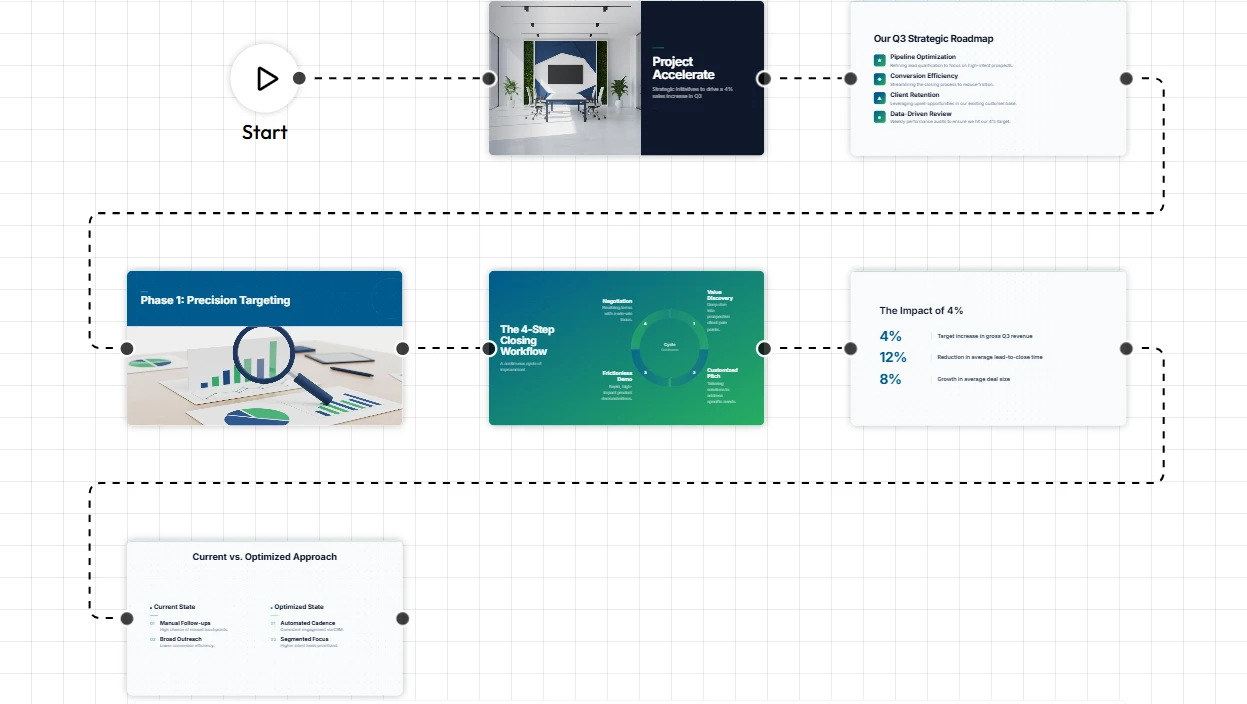
Educational AI addresses this by moving away from linear, one-size-fits-all presentations. Unni utilizes a node-based architecture that supports branching scenarios. If an onboarding module covers advanced data security, the artificial intelligence can embed a pre-assessment at the beginning of the module. Based on the learner’s responses, the system dynamically adjusts the learning path. If the employee demonstrates mastery of basic concepts, the system routes them directly to advanced protocols, saving valuable time. If they struggle with the pre-assessment, the system routes them to foundational materials.
This dynamic routing mimics the experience of having a dedicated tutor. It respects the intelligence and prior experience of the new hire while ensuring that critical competency gaps are addressed before the employee is placed in a live production environment.
Creating Dynamic AI Slides for High Retention
The visual delivery of information is just as important as the structural logic. To combat the fatigue associated with mandatory corporate training, the presentation layer must be highly engaging. Generating AI slides through Unni.ai ensures that visual best practices are automatically applied to the learning material.
Rather than relying on static bullet points, the platform distributes content across motion-rich cards. This spatial arrangement prevents cognitive overload by introducing complex ideas sequentially. The AI automatically matches the text with relevant diagrams, process charts, or localized digital presenters. This multimedia approach satisfies the dual-coding theory of learning, which posits that learners process visual and verbal information through separate channels. When both channels are engaged simultaneously with well-aligned content, retention improves drastically.
Furthermore, these slides are inherently interactive. Unni embeds knowledge checks directly into the flow of the presentation. A new hire might read a policy, watch a brief generated video explaining its application, and immediately answer a scenario-based question. This immediate reinforcement bridges the gap between passive consumption and active skill application.
Future-Focused Insights: Scaling Instructional Design with Unni
As organizations scale, their onboarding requirements become increasingly complex. Global enterprises must deliver consistent training across multiple time zones and languages. The future of corporate learning relies on centralized platforms that can output localized, highly accessible content instantly.
Unni is engineered to support this global scale. By serving as a single source of truth, the platform allows instructional designers to generate a master onboarding course and automatically translate the text and narration into multiple languages. This capability ensures that a new hire in France receives the exact same standard of training as a new hire in Mexico, without the company needing to hire regional instructional designers.
Additionally, the platform respects existing corporate infrastructure. Organizations do not need to abandon their current Learning Management Systems. Training modules generated within Unni can be exported seamlessly as SCORM packages, ensuring smooth integration with enterprise tracking software. By combining rapid generation, deep personalization, and universal compatibility, Unni provides a comprehensive solution for modern workplace learning.
Frequently Asked Questions (FAQ)
How does training automation impact time-to-productivity for new hires?
By delivering precise, role-specific information through interactive modules, training automation prevents cognitive overload. Employees absorb and retain standard operating procedures faster, allowing them to transition from training to active contribution in less time compared to traditional manual onboarding methods.
Can we use our existing employee handbooks with an AI presentation generator?
Yes. Platforms like Unni.ai are designed to ingest your existing legacy materials, including PDFs, Markdown files, and text documents. The system analyzes your proprietary documents and restructures them into modern, engaging training modules, preserving your core knowledge while upgrading the delivery format.
What makes AI slides different from traditional presentation softwares?
Traditional presentation software requires manual formatting, layout design, and static text entry. AI slides are generated dynamically based on content prompts. They automatically incorporate instructional design best practices, sequence information logically, and embed interactive elements like quizzes without requiring manual coding or design expertise.
How does educational AI personalize the onboarding experience?
Educational AI utilizes branching logic and embedded assessments. By testing a learner’s knowledge in real-time, the system can dynamically adjust the curriculum. It routes advanced learners past foundational topics to save time, while providing additional remedial content to employees who need further instruction on specific corporate policies.
Will Unni integrate with our current Learning Management System?
Yes. Unni.ai supports industry-standard export formats, including SCORM packages. This ensures that the interactive courses you create can be uploaded directly into your existing LMS, allowing your human resources team to continue tracking learner progress and completion rates without disrupting your established IT infrastructure.
Conclusion
Accelerating the onboarding process requires a fundamental shift in how organizations design and deliver corporate knowledge. Relying on static documents and manually built presentations creates unnecessary friction for both instructional designers and new hires. By integrating an AI presentation generator into your workflow, you can automate the heaviest burdens of course creation.
Utilizing educational AI to develop adaptive learning paths ensures that every employee receives a personalized, highly relevant introduction to their role. Ultimately, the ability to rapidly generate interactive AI slides transforms onboarding from a slow administrative hurdle into an agile, engaging process that drives immediate workforce productivity.
Ready to transform your workflow? Try Unni.ai for free today and see how Unni can reclaim your time.