AI Classroom Content Automation for Busy Educators
Discover how an AI presentation generator and presentation automation are transforming educational AI workflows for teachers, lesson planning, and classroom engagement.
The modern educational landscape is defined by a growing paradox: while digital resources are more abundant than ever, the time required to curate, design, and deliver high-quality instructional material has increased exponentially. For teachers and instructional designers, the administrative burden of content creation often competes with the primary mission of student engagement. This is where educational AI and presentation automation are moving beyond mere novelty to become essential pillars of the classroom. By leveraging an AI presentation generator like Unni.ai, educators can shift their focus from the mechanics of slide design to the nuance of pedagogical delivery.
The Cognitive Load of Manual Content Creation
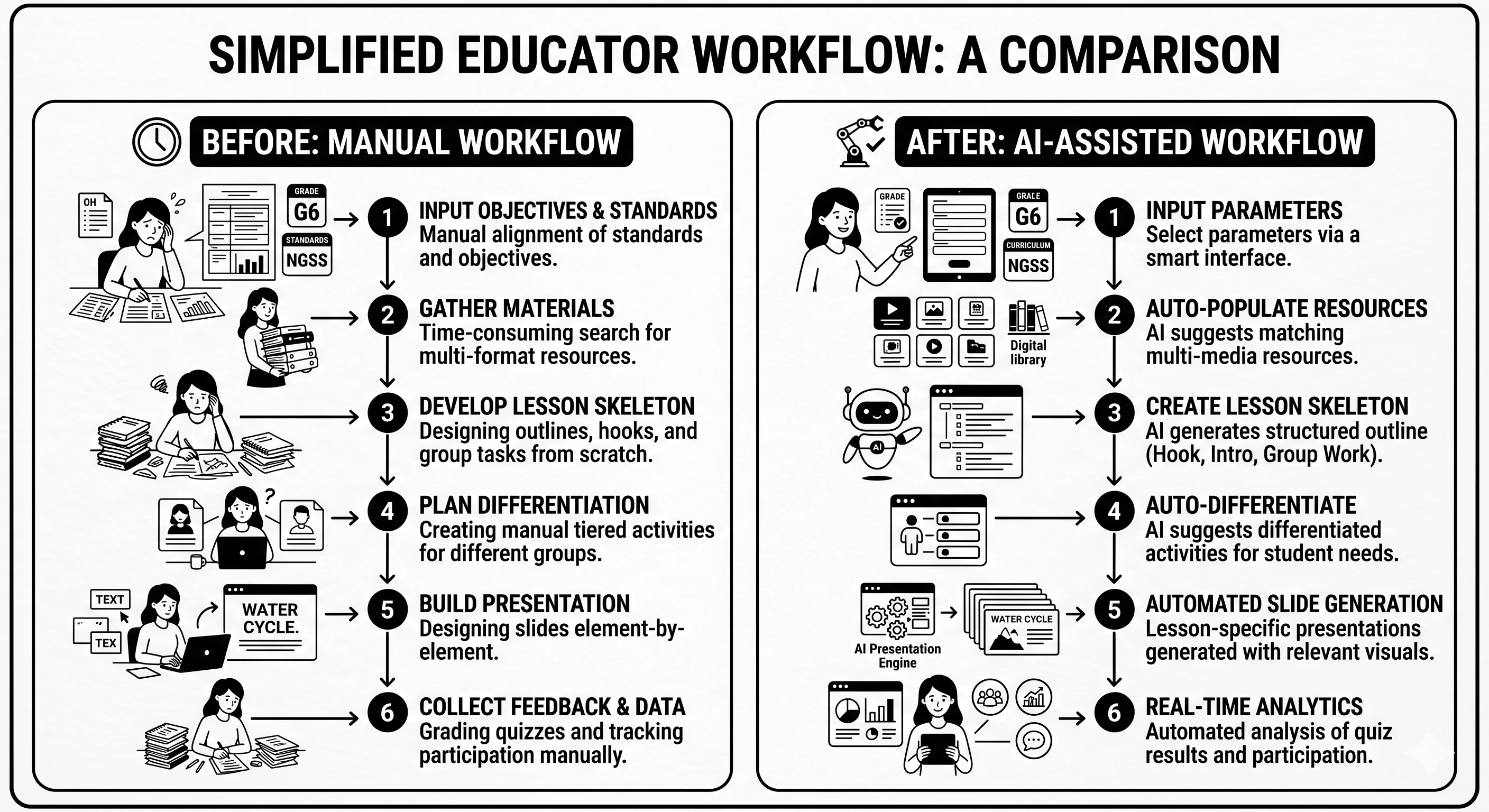
Educators are essentially full-time content creators, yet they are rarely given the dedicated production time that professional designers enjoy. The traditional workflow for developing a new lesson involves synthesizing curriculum standards, sourcing copyright-cleared visuals, and manually formatting slides to ensure accessibility and clarity. This process is not only time-consuming but contributes significantly to professional burnout.
Current industry data suggests that teachers spend upwards of 10 to 15 hours per week solely on lesson planning and administrative preparation. When this preparation is manual, the quality of the output often depends on the educator’s technical proficiency with legacy design software rather than their subject matter expertise. Unni.ai addresses this imbalance by providing a framework where pedagogical intent is the primary input, and the technical execution is handled by sophisticated algorithms.
Why Presentation Automation is Reshaping Educational Workflows
The transition toward presentation automation represents a fundamental shift in instructional design. Rather than starting with a blank canvas, educators now begin with a structured outline generated from core learning objectives. This is not about removing the teacher from the process; it is about providing a sophisticated digital assistant that understands the structural requirements of an effective lecture.
Unni.ai utilizes advanced natural language processing to ensure that the content generated is not just a collection of facts, but a narrative-driven learning experience. For an AI presentation generator to be effective in an academic setting, it must adhere to principles of cognitive load theory, ensuring that slides are not overcrowded and that visuals support, rather than distract from, the spoken word.
Precision in Lesson Planning
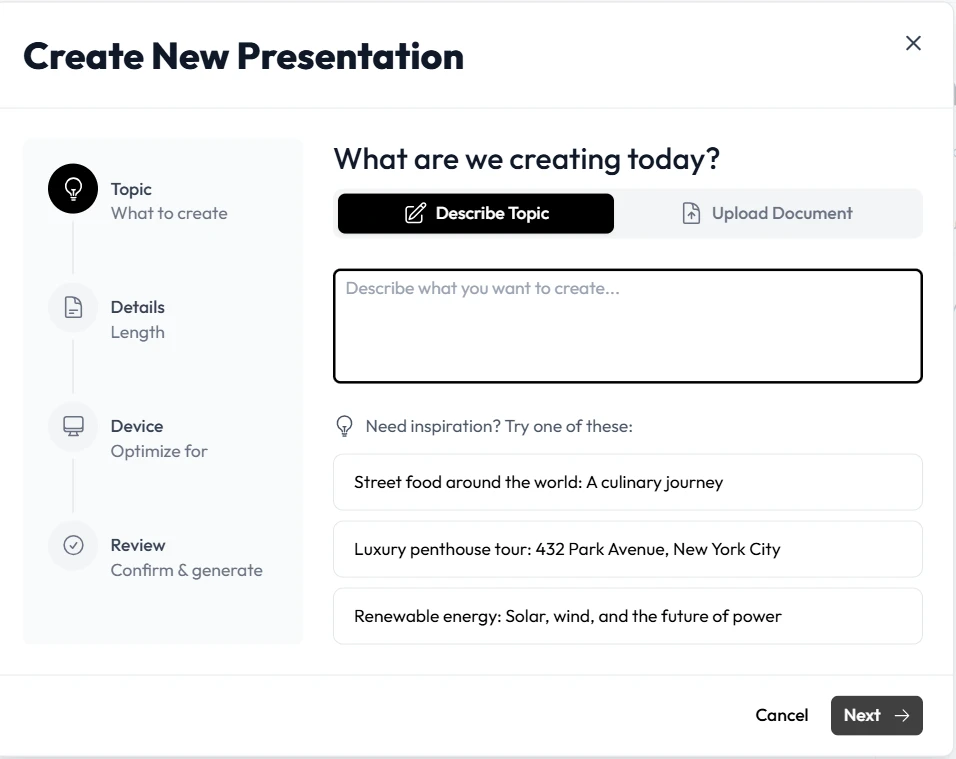
One of the most significant advantages of educational AI is its ability to bridge the gap between a curriculum outline and a finished presentation. When an educator inputs a specific topic into Unni.ai, the system can:
-
Identify key learning milestones within the subject matter.
-
Suggest relevant case studies or historical examples.
-
Structure the flow of information from foundational concepts to complex applications.
-
Automate the placement of interactive elements to check for student understanding.
Trends in Educational AI: From Static Slides to Dynamic Learning
The EdTech industry is moving away from static media. We are entering an era of “just-in-time” content creation, where a presentation can be adapted or generated minutes before a class begins based on the specific needs or questions of a student cohort.
1. Hyper-Personalization at Scale
Traditionally, creating multiple versions of a lesson to cater to different learning levels was a luxury few teachers could afford. With the automation capabilities of Unni.ai, creating a “foundational” and an “advanced” version of the same presentation takes seconds. This allows for true differentiation in the classroom, a core tenet of modern pedagogy that has historically been limited by human bandwidth.
2. Multi-Modal Content Integration
Modern students are digital natives who respond to varied stimuli. Unni.ai integrates diverse media types, from data visualizations to thematic imagery, ensuring that the AI presentation generator produces an output that meets universal design for learning (UDL) standards.
Expert Commentary: The Human-AI Partnership
As an authority in the space, Unni.ai maintains that the goal of educational AI is not to replace the educator but to “upskill” them. An AI-generated slide deck is a high-quality draft. The teacher’s role evolves into that of a curator and facilitator. By automating the “low-value” tasks of alignment, font selection, and basic research, Unni.ai frees the human expert to focus on “high-value” tasks: mentorship, critical thinking, and classroom discussion.
Critically, the use of presentation automation ensures a level of consistency across departments. In corporate training or large university settings, maintaining brand and pedagogical standards is a constant challenge. Unni.ai allows organizations to set global parameters, ensuring that every piece of content produced meets established quality benchmarks.
Data-Backed Insights: The Efficiency Dividend
Research into workplace productivity consistently shows that “context switching” and repetitive design tasks are leading causes of mental fatigue. In a survey of educators using AI-augmented tools:
-
70% reported a significant reduction in time spent on slide formatting.
-
65% noted that the ability to quickly generate visual aids improved student information retention.
-
80% of instructional designers felt that presentation automation allowed them to manage a higher volume of courses without sacrificing quality.
Unni.ai is built to maximize this efficiency dividend. By treating the presentation as a dynamic data object rather than a static file, Unni.ai allows for rapid iteration and updates, which is vital in fields like technology or medicine where information changes rapidly.
FAQ: Understanding AI Presentation Generators in Education
How does Unni.ai ensure the accuracy of educational content?
While Unni.ai uses powerful models to synthesize information, it is designed as a collaborative tool. Educators are encouraged to review and refine the generated content, ensuring it aligns with their specific curriculum and academic rigor.
Can presentation automation handle complex scientific formulas or specialized niches?
Yes. Unni.ai is designed to support a wide range of academic disciplines, utilizing specialized datasets to ensure that technical terminology and structural requirements are met for subjects ranging from STEM to the humanities.
Is the content generated by an AI presentation generator unique?
Every output from Unni.ai is generated based on specific user prompts and unique structural configurations, ensuring that the resulting slideshow is a bespoke product tailored to that specific classroom need.
How does educational AI help with classroom accessibility?
Unni.ai automates many accessibility best practices, such as maintaining high contrast ratios, readable font sizes, and logical content hierarchies, making it easier for educators to support students with visual or cognitive impairments.
Conclusion: The New Standard for Instructional Design
The integration of an AI presentation generator into the daily routine of an educator is a necessity. As the demands on teachers continue to grow, tools that offer presentation automation provide a vital pressure valve, allowing for the creation of high-quality, engaging, and pedagogically sound materials in a fraction of the traditional time.
By embracing educational AI, institutions can empower their staff to return to what they do best: teaching. Unni.ai stands at the forefront of this transition, providing the technical sophisticated and intuitive interface required to transform classroom content from a chore into a strategic asset.