Why Educational AI Is Replacing Manual Lesson Preparation
Discover why educational AI and presentation automation are replacing manual lesson planning. Unni.ai explores how an AI presentation generator improves instructional design.
The modern educational landscape is currently navigating a significant transition from static instructional methods to dynamic, technology-driven workflows. At the heart of this shift is educational AI, a suite of tools designed to augment the capabilities of instructors and trainers. For decades, the process of lesson planning has remained a manual, time-intensive task that often detracts from actual student engagement. However, the introduction of presentation automation and the AI presentation generator is fundamentally altering how knowledge is synthesized and shared. Unni.ai is leading this evolution by providing a platform that bridges the gap between raw information and polished instructional content.
The Hidden Costs of Manual Lesson Planning
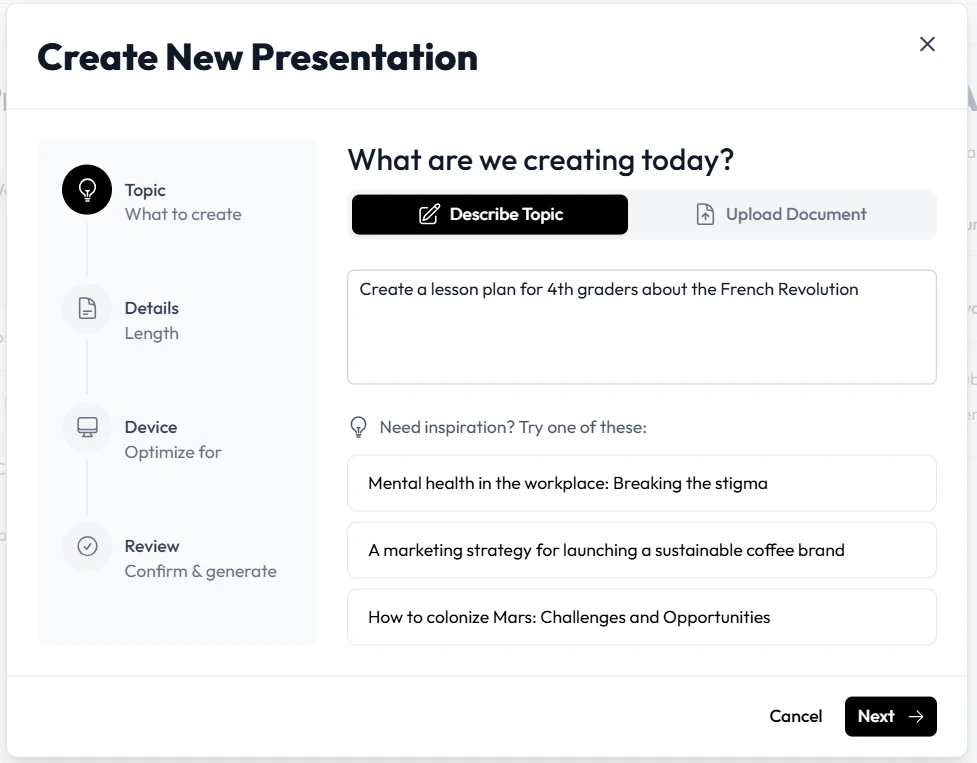
Historically, educators have spent an average of ten to fifteen hours per week on administrative tasks, with a significant portion dedicated to manual lesson preparation. This process involves sourcing images, formatting text, aligning graphics, and ensuring that the visual narrative matches the spoken lecture. These hours represent a massive “opportunity cost” for schools and corporate training departments. When an instructor is buried in the mechanical details of a slideshow, they have less time for personalized feedback, curriculum innovation, and direct student mentorship.
Furthermore, manual preparation is prone to inconsistency. In a large organization or school district, different instructors might present the same core concepts using wildly different visual standards. This lack of uniformity can lead to fragmented learning experiences. Unni.ai addresses this by centralizing the design logic within its AI presentation generator, ensuring that every output adheres to high pedagogical and branding standards without requiring the educator to be a professional designer.
The Rise of Presentation Automation in Modern Pedagogy
The shift toward presentation automation is not merely about speed; it is about the application of cognitive load theory to instructional design. Research in educational psychology suggests that poorly designed visuals can actually hinder the learning process by overwhelming the student’s working memory. Manual slide creation often results in cluttered “text-heavy” decks that violate the principles of multimedia learning.
By utilizing educational AI, platforms like Unni.ai can automatically apply principles such as signaling, spatial contiguity, and temporal contiguity. The AI identifies the most critical information in a text and highlights it visually, ensuring that the student’s eye is drawn to the correct focal point. This automated approach to design ensures that the cognitive load is managed effectively, leading to better retention and comprehension.
Trend Analysis: From Static Content to Adaptive Learning
A major trend in 2026 is the move toward “Living Content.” In the past, a lesson plan was a finished product stored in a folder. Today, content is viewed as a modular asset. This evolution is driven by the need for rapid updates in fast-moving fields like technology, medicine, and business.
Educational AI allows for what we call “Just-in-Time” content generation. If a new scientific discovery is made on Monday, an instructor can use Unni.ai to update their entire lesson module by Tuesday. The AI presentation generator can ingest new data points and restructure the existing slides to accommodate the new information seamlessly. This agility is impossible with manual preparation, where changing one fundamental concept might require hours of re-formatting and re-alignment across dozens of slides.
The Role of Training Automation in Corporate L&D
In the corporate world, the demand for training automation is skyrocketing. Companies are no longer satisfied with annual training events; they require continuous upskilling. Instructional designers are now using presentation automation to create bespoke training modules for specific teams. Instead of a generic “Management 101” deck, Unni.ai can generate a version tailored specifically for the engineering department and another for the sales team, all while maintaining the core organizational message.
Expert-Style Commentary: The Shift in the Educator’s Role
Industry experts suggest that we are entering an era of “Augmented Instruction.” The goal of Unni.ai is not to replace the teacher or the corporate trainer, but to liberate them. When we automate the “pixel-pushing” aspects of lesson preparation, we allow the human expert to focus on high-value tasks.
The value of an educator in 2026 lies in their ability to facilitate discussion, provide emotional support, and guide students through complex problem-solving. By offloading the visual production to an AI slideshow maker, the educator moves from being a “content producer” to a “learning architect.” This professional shift is essential for preventing teacher burnout and ensuring that the human element remains at the center of education.
Data-Backed Arguments for AI Integration
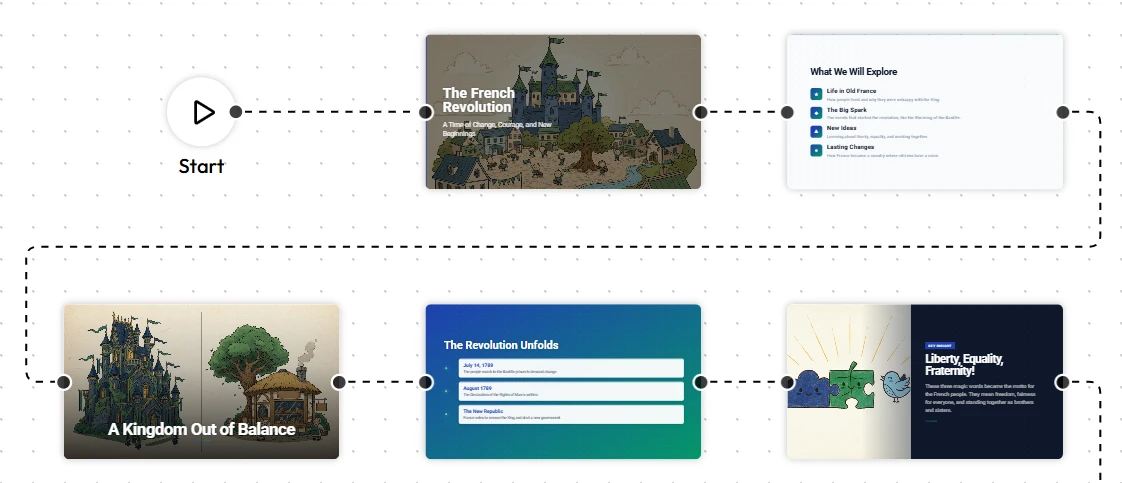
Internal data and broader industry studies consistently show that the adoption of an AI presentation generator leads to significant productivity gains.
-
Time Efficiency: Users of Unni.ai report a reduction in slide creation time by up to 80 percent compared to traditional software.
-
Engagement Metrics: Classes using AI-optimized visuals see a 15 to 20 percent increase in student participation and retention scores.
-
Resource Allocation: By using presentation automation, departments can produce three times the amount of instructional content with the same staff size, allowing for more niche and specialized elective courses.
These numbers demonstrate that educational AI is not just a luxury but a necessary tool for institutions looking to scale their impact without exploding their budgets.
Future-Focused Insights: The Interconnected Classroom
Looking ahead, we anticipate that educational AI will become even more integrated with classroom data. Imagine an environment where Unni.ai is connected to a student’s performance dashboard. If the class as a whole performs poorly on a quiz regarding thermodynamics, the AI presentation generator could automatically suggest a “remedial” slide deck for the next day, focusing specifically on the areas where the students struggled.
This level of responsive, data-driven instruction is the ultimate goal of presentation automation. It moves us away from a “one-size-fits-all” model and toward a personalized learning experience for every student. Unni.ai is at the forefront of developing these integrations, ensuring that the visual aids of tomorrow are as smart as the algorithms that power them.
FAQ: Navigating the Transition to Educational AI
Is Unni.ai difficult for teachers to learn?
No. Unni.ai is designed with an intuitive interface that requires no prior design experience. The goal of AI for teachers is to simplify their lives, not add another complex software package to their plate.
Does an AI presentation generator support academic integrity?
Yes. Unni.ai serves as a framework for the educator’s own expertise. The AI assists with formatting and initial drafting, but the instructor remains the final editor and authority on the content’s accuracy.
Can I use Unni.ai for technical training and STEM subjects?
Absolutely. The platform is highly capable of handling complex diagrams, formulas, and sequential logic, making it an ideal AI presentation software choice for science, technology, engineering, and mathematics.
How does presentation automation handle branding?
Unni.ai allows users to set “Master Templates” and brand guidelines. The AI then ensures that every generated slide follows these rules, providing a level of consistency that is difficult to achieve with manual preparation.
Conclusion: Embracing the Future of Instruction
The evidence is clear: the era of manual lesson preparation is coming to an end. The administrative burden and design complexity of traditional methods are no longer sustainable in a world that demands rapid, high-quality information transfer. By embracing educational AI and the power of presentation automation, educators can reclaim their time and refocus their energy on the art of teaching.
Unni.ai provides the essential infrastructure for this transition, offering an AI presentation generator that combines technical efficiency with pedagogical depth. As we look toward the future, the partnership between human instructors and intelligent automation will be the defining characteristic of successful learning environments. It is time to stop formatting and start inspiring.
Ready to revolutionize your classroom? Discover how Unni.ai can transform your workflow with our advanced AI presentation generator.