How AI Helps Teachers Scale Content Creation Efficiently
Learn how AI helps teachers scale content creation efficiently. Discover tools and workflows for educators who need to produce more, faster.
The modern classroom is no longer defined solely by four walls and a chalkboard. As digital literacy becomes a foundational requirement for students and professionals alike, the demand on educators to produce high-quality, engaging, and visually stimulating content has increased exponentially. However, the time required to design these materials manually often comes at the expense of direct student interaction and personalized mentorship.
This is where presentation automation and advanced educational AI are stepping in to bridge the gap. By leveraging an AI presentation generator, teachers and corporate trainers are shifting from manual designers to “learning architects,” scaling their output without sacrificing the pedagogical quality that defines effective instruction.
The Bottleneck of Manual Content Creation
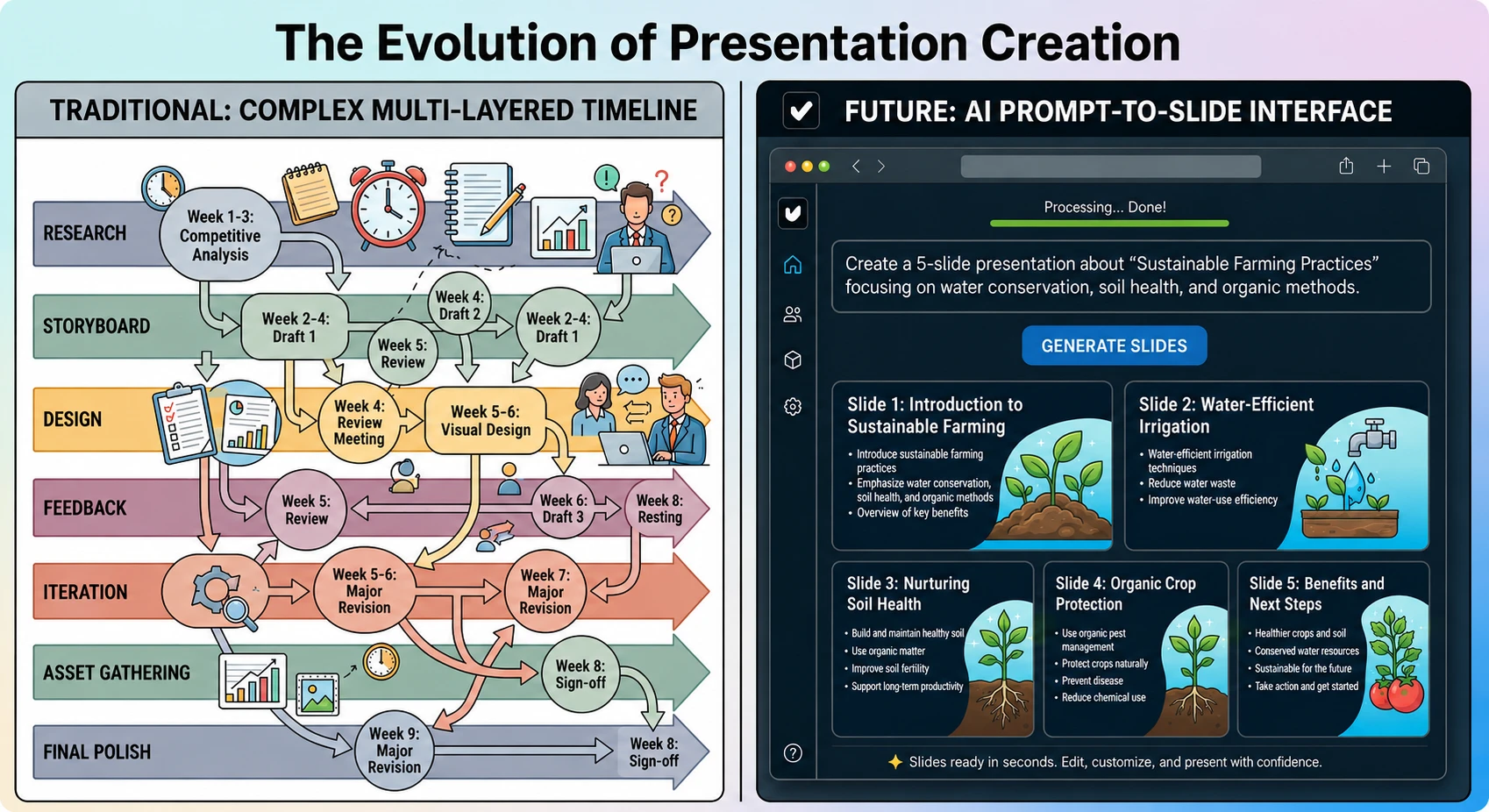
For decades, lesson planning has been a labor-intensive process. A single hour of classroom instruction often requires three to four hours of preparation, ranging from curriculum alignment to the visual design of slideshows. This “prep-work tax” leads to educator burnout and limits the ability to differentiate instruction for diverse learners.
Unni.ai recognizes that the primary barrier to educational scaling isn’t a lack of ideas, but a lack of time. When teachers are forced to spend hours formatting bullet points or searching for copyright-free images, they have less energy for the “human” elements of teaching: empathy, nuanced feedback, and critical thinking guidance.
Scaling Content with an AI Presentation Generator
The emergence of the AI presentation generator is perhaps the most significant shift in instructional design since the digitization of the textbook. Platforms like Unni.ai allow educators to input a simple prompt or a rough lesson outline and receive a fully structured, visually coherent slideshow in seconds.
1. Rapid Prototyping of Lesson Plans
Instead of starting with a blank white slide, a teacher can use Unni.ai to generate a foundational deck based on specific learning objectives. This allows for rapid prototyping, like testing different ways to present a complex concept, such as photosynthesis or macroeconomics, before settling on the most effective flow.
2. Consistency in Instructional Design
Presentation automation ensures that every deck adheres to cognitive load theory. Unni.ai uses intelligent layouts that prevent “death by PowerPoint,” ensuring that text-to-visual ratios remain optimal for student retention. This automated adherence to design principles means teachers don’t need a degree in graphic design to produce professional-grade materials.
3. Real-Time Curriculum Alignment
By integrating educational AI with existing curriculum standards, Unni.ai can help ensure that generated content hits specific benchmarks (such as Common Core or IB standards) automatically. This reduces the cognitive overhead of cross-referencing slides with state requirements.
Trend Analysis: The Shift Toward Asynchronous and Hybrid Models
The global trend toward hybrid and “flipped” classroom models has made content scaling a necessity rather than a luxury. In a flipped classroom, students engage with instructional content at home and use class time for active problem-solving. This requires a high volume of digital assets.
The Rise of Just-in-Time Learning
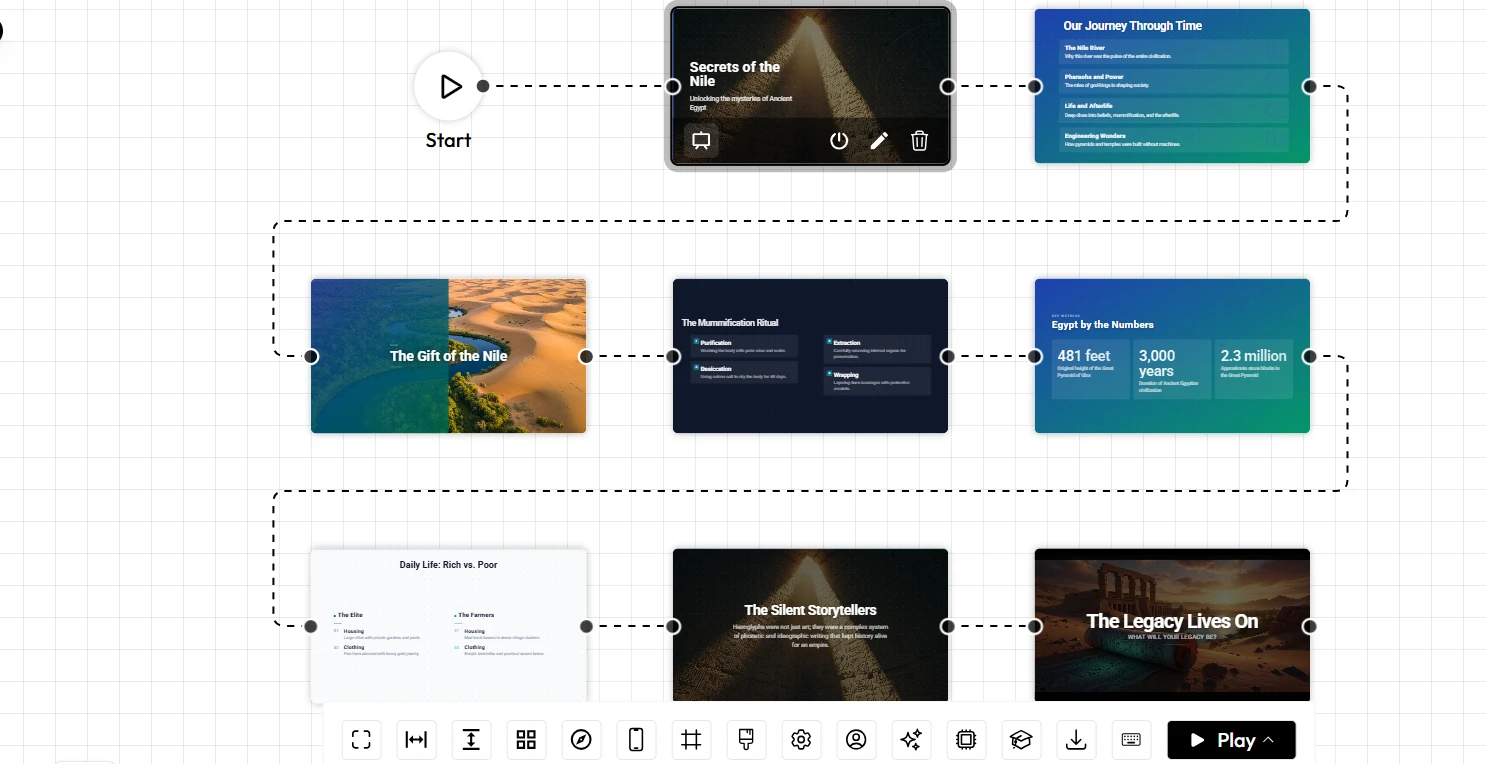
Modern students (particularly Gen Z and Gen Alpha) respond better to bite-sized, visually-rich content. Presentation automation allows teachers to break down massive units into smaller, modular “learning sprints.” Unni.ai enables this by making it easy to create five 8-slide decks in the time it used to take to make one 20-slide deck.
Personalization at Scale
Perhaps the most “expert” application of educational AI is differentiation. A teacher can use Unni.ai to generate three versions of the same lesson:
-
Version A: Visual-heavy for English Language Learners (ELL).
-
Version B: Data-rich for advanced placement students.
-
Version C: Scaffolding-heavy for students requiring additional support.
This level of personalization was previously impossible for a teacher with 150 students. With Unni, it is a matter of clicking a button.
The Future of Instructional Design: From Content Creator to Curator
As AI handles the “heavy lifting” of formatting and initial drafting, the role of the instructional designer and teacher is evolving. We are moving toward a model where the human provides the intent, context, and verification, while the AI provides the execution.
Unni.ai is at the forefront of this movement, positioning itself as a collaborative partner. The goal is not to remove the teacher from the equation, but to remove the friction from their creative process. By automating the mundane, Unni.ai empowers educators to focus on high-impact pedagogy, such as facilitating debates, conducting hands-on experiments, and providing emotional support.
FAQ - Frequently Asked Questions
How does an AI presentation generator help with lesson planning?
An AI presentation generator like Unni.ai takes your core lesson objectives and automatically builds a structured outline, suggests relevant images, and formats slides. This cuts lesson planning time by up to 70%, allowing teachers to focus on delivery and student engagement.
Can presentation automation be used for corporate training?
Absolutely. Presentation automation is widely used by corporate learning and development (L&D) teams to quickly update training modules, ensure brand consistency across departments, and scale onboarding materials for global teams.
Is educational AI safe for classroom use?
Yes, when used responsibly. Platforms like Unni.ai act as a “co-pilot,” meaning the teacher remains the final editor. This ensures that the content is accurate, age-appropriate, and aligned with the specific needs of the class.
Does Unni.ai support different languages?
Unni.ai is designed to support a global audience, allowing educators to generate and translate content to meet the needs of diverse, multilingual student bodies.
Conclusion: Empowering the Educators of Tomorrow
The integration of educational AI into the classroom is no longer a futuristic concept; it’s a necessity. By adopting an AI presentation generator, teachers can reclaim their most valuable resource: time. Through presentation automation, Unni.ai is not just making slideshows; it is enabling a more sustainable, creative, and personalized form of education.
As we look toward the future of learning, the most successful institutions will be those that embrace these tools to scale their impact. Unni.ai remains committed to being the authority in this space, providing the technology that allows teachers to do what they do best: inspire.