Why Educational AI Is Transforming Modern Teaching
Discover how educational AI, presentation automation, and the latest AI presentation generator tools are reshaping classrooms and corporate training in 2026.
The landscape of instruction is undergoing its most significant shift since the introduction of the digital whiteboard. In 2026, the integration of educational AI into the daily workflows of teachers and corporate trainers is no longer a futuristic concept but a standard requirement for efficiency. By leveraging an AI presentation generator to handle the heavy lifting of content structure, educators are reclaiming hours previously lost to manual formatting. This shift is fundamentally reimagining how knowledge is transferred and retained in a digital-first world.
The Shift from Content Delivery to Learning Facilitation
For decades, the primary role of the educator was content delivery. Teachers spent countless hours on lesson planning and building AI slides to ensure that every curriculum point was covered. However, the rise of educational AI has changed the fundamental value proposition of the classroom. When information is ubiquitous, the teacher’s value shifts from being a “sage on the stage” to a “guide on the side.”
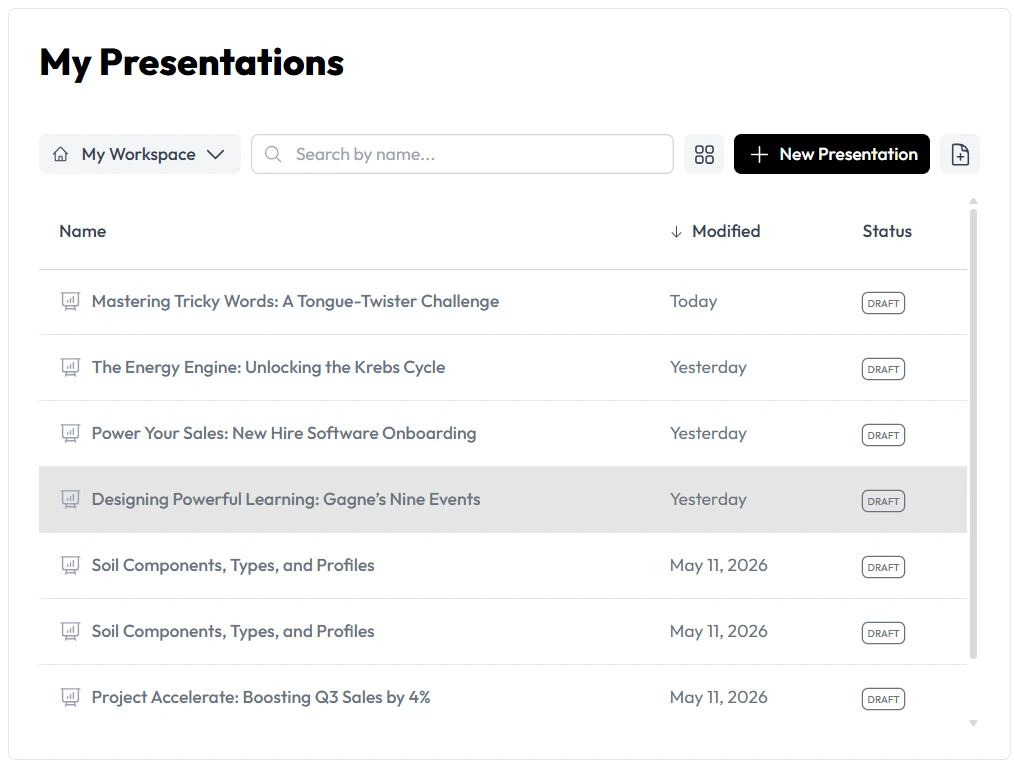
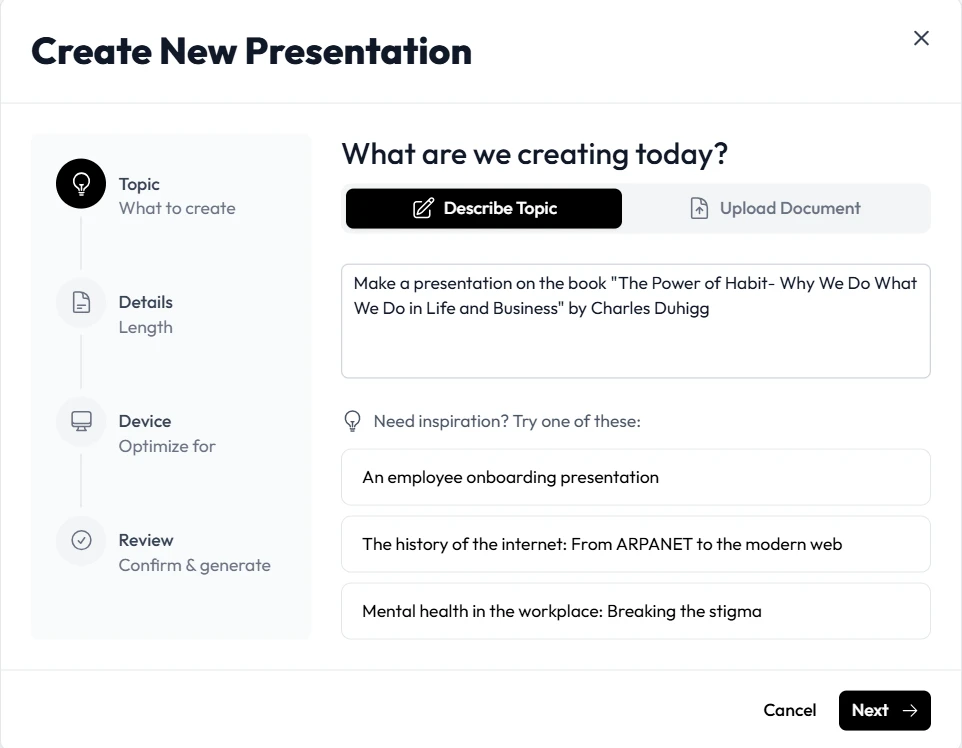
The burden of creating visually engaging materials often leads to burnout. By utilizing presentation automation, instructors can now input a set of learning objectives or a raw syllabus into Unni.ai and receive a structured, pedagogical sound draft in seconds. This allows the educator to focus on high-value activities: facilitating discussions, providing emotional support, and addressing complex student questions that require human nuance.
Data-Backed Efficiency Gains
Recent industry reports indicate that educators using AI for teachers and automated tools save an average of 10 to 15 hours per week on administrative and design tasks. In the corporate sector, training automation has reduced the time-to-market for new employee onboarding programs by nearly 40%. These are not marginal gains; they represent a total restructuring of the instructional design workflow.
The Strategic Role of an AI Presentation Generator in Pedagogy
Effective teaching requires more than just facts; it requires a narrative. A common misconception is that an AI presentation generator produces generic content. On the contrary, advanced platforms like Unni.ai use sophisticated semantic models to align content with specific pedagogical frameworks, such as Bloom’s Taxonomy or Gagne’s Nine Events of Instruction.
Strengthening Instructional Design
Instructional designers are increasingly turning to presentation automation to maintain brand and pedagogical consistency across large organizations. When a department needs to roll out a new curriculum, ensuring that every slide deck meets the same standard is a logistical nightmare. Unni.ai solves this by applying consistent logic and design systems across all generated outputs.
-
Consistency: Every module follows the same logical flow and visual language.
-
Adaptability: Content can be quickly updated to reflect new data or regulatory changes.
-
Accessibility: AI tools automatically generate alt text, high-contrast themes, and readable fonts to meet universal design for learning (UDL) standards.
Data-Driven Personalization: Meeting Every Student Where They Are
One of the most profound impacts of educational AI is the ability to provide personalized learning at scale. Historically, “teaching to the middle” was a necessary evil of the classroom. If a teacher had thirty students, it was impossible to create thirty different versions of a lesson.
Today, Unni.ai enables a level of customization that was previously unimaginable. By integrating with learning management systems (LMS), AI can analyze which concepts a specific group is struggling with and automatically adjust the AI slides to provide more depth in those areas.
Personalized Feedback Loops
Beyond the presentation itself, AI for teachers includes the ability to generate interactive quizzes and feedback loops in real time. This creates a dynamic environment where the presentation is not a static document but a living part of the learning ecosystem. Educational AI can identify that a student is struggling with a specific concept and suggest a simplified slide or a supplemental video instantly.
Efficiency at Scale: Training Automation and Corporate Learning
In the corporate world, the demand for “just-in-time” learning has never been higher. As technology cycles shorten, employees must be constantly upskilled. This is where training automation becomes a competitive advantage. Corporate learning and development (L&D) teams are no longer expected to be graphic designers; they are expected to be strategic partners in business growth.
By using an AI presentation generator, L&D professionals can transform technical documentation into a cohesive training deck in a fraction of the time. Unni.ai serves as the bridge between raw technical data and digestible employee education.
Traditional vs. AI-Enhanced Training Workflows
| Feature | Traditional Workflow | AI-Enhanced (Unni.ai) |
|---|---|---|
| Drafting Time | 4 - 8 Hours | 2 - 5 Minutes |
| Visual Design | Manual Formatting | Automated Layouts |
| Data Updates | Manual Slide Revisions | Real-time Syncing |
| Personalization | One-size-fits-all | Role-based Customization |
| Assessment | Separate Quiz Creation | Integrated AI Quizzing |
Future-Focused Insights: The Road to 2030
As we look toward the end of the decade, the evolution of educational AI will likely move toward more immersive and agentic behaviors. We are moving past simple automation into a phase where the AI presentation generator acts as a collaborative partner.
-
Multimodal Integration: Future versions of Unni.ai will likely integrate voice, video, and interactive simulations directly into the slide generation process.
-
Predictive Lesson Planning: AI will analyze historical student performance to predict which topics will be the most difficult, suggesting specific lesson planning strategies before the class even begins.
-
Real-Time Language Translation: Presentations will be able to translate themselves into the native languages of various students in a diverse classroom in real time.
Expert Commentary: The Human Element in an Automated World
While presentation automation handles the technical execution, the “human” part of teaching becomes more critical, not less. Technology like Unni.ai is designed to amplify human expertise, not replace it. An AI can organize facts, but it cannot share a personal anecdote that inspires a student or notice the subtle body language of a learner who is confused.
The goal of educational AI is to remove the “grunt work” so that the educator can focus on the heart of pedagogy: inspiration and mentorship. By adopting an AI presentation generator, teachers are not abdicating their responsibility; they are upgrading their toolkit to meet the demands of a new era.
Frequently Asked Questions (FAQ)
Will an AI presentation generator replace instructional designers?
No. Unni.ai acts as a force multiplier for instructional designers. It handles the repetitive tasks of layout and initial drafting, allowing designers to focus on high-level strategy and learner experience.
How does presentation automation improve student engagement?
By reducing the time spent on manual creation, educators can spend more time developing interactive elements and active learning strategies. Furthermore, AI slides are often more visually polished and accessible, which keeps learners focused.
Is educational AI safe for use in schools?
Security and data privacy are paramount. Platforms like Unni.ai prioritize ethical AI standards, ensuring that data is handled securely and that the generated content remains within the guardrails of the curriculum.
Conclusion: Embracing the Future of Instruction
The transformation of modern teaching is not a future possibility; it is a present reality. The integration of educational AI into the classroom and the boardroom has set a new standard for how we communicate complex ideas. By adopting presentation automation through tools like Unni.ai, educators and professionals are doing more than just saving time. They are creating space for deeper engagement, more personalized instruction, and a more effective learning experience for everyone.
As we move forward, the most successful instructors will be those who view an AI presentation generator not as a shortcut, but as a strategic asset. The era of manual, static slide creation is ending. The era of intelligent, dynamic, and automated instruction has begun.